 Ultimate guide
7 Reasons Artisan Pizza Is Worth the Price
Last Updated: October 30, 2026
Quick Summary
Artisan pizza is worth the price because you pay for slow-fermented dough, house-made sauce, quality cheese, and a hot, fast bake rather than conveyor-belt assembly. The premium covers dough time, ingredient quality, oven fuel, and trained staff, so the extra money buys flavor and craft instead of the word artisan.
- Slow fermentation ties up refrigerator space and staff hours before a single pizza sells.
- Whole-milk mozzarella melts into stretch, while part-skim and blends pool grease.
- A wood-fired oven chars and blisters crust in a couple of minutes instead of drying it out.
- If the artisan pizza costs less than 25% more per serving, most families find the premium easy to justify.
- Skip the premium when you plan to bury the base under five toppings and heavy sauce.
Table of Contents
- Artisan Pizza vs Regular Pizza: What the Extra Money Buys
- Why Is Artisan Pizza Expensive? A Transparent Breakdown
- Artisan Pizza Ingredients: What Separates Quality From Marketing
- The Wood-Fired Oven and the Bake That Changes Everything
- Cost Per Serving: A Like-for-Like Comparison
- A Practical Guide to Judging Artisan Pizza Quality
- When Artisan Pizza Is and Is Not Worth the Premium
- Ordering From a Family-Owned Pizzeria You Can Trust
- Frequently Asked Questions
Artisan Pizza vs Regular Pizza: What the Extra Money Buys
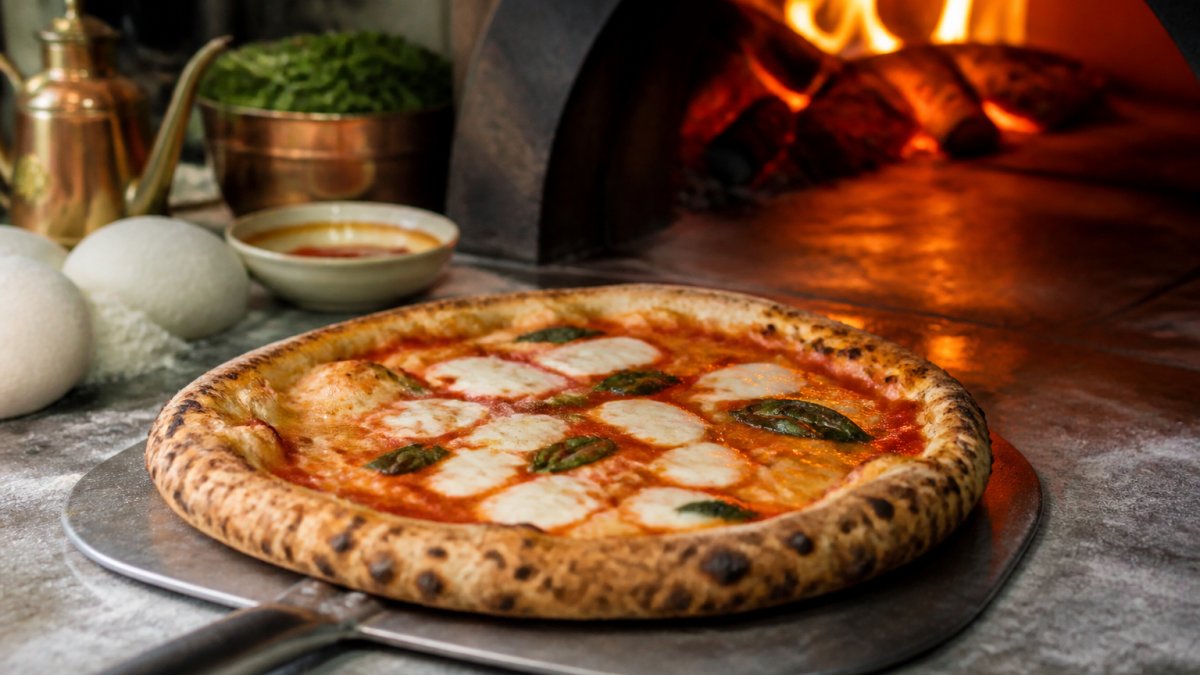
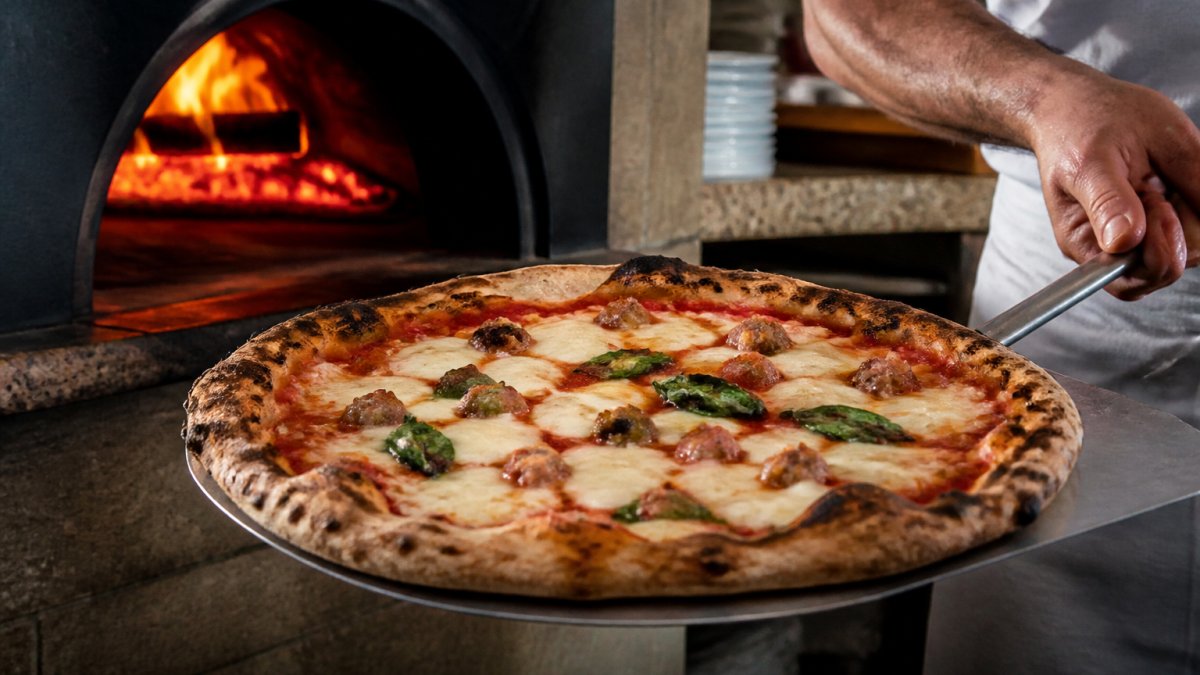
Artisan pizza is a style of pizza built on slow-fermented dough, house-made sauce, quality cheese, and a hot, fast bake, rather than on conveyor-belt assembly and pre-shredded toppings. Families often weigh that difference at the counter, and the gap shows up in three places: crust, sauce, and cheese.
You can taste the difference in the first bite, and you can also feel it in your wallet.
Crust, Sauce, and Cheese: The Three-Part Difference
Crust is where the money goes first. That longer fermentation is what produces the chew, the blistered edge, and the flavor that a rushed dough cannot match. explanation of pizza dough fermentation from King Arthur Baking
Sauce and cheese follow the same logic. House-made sauce means whole tomatoes, real seasoning, and a cook who tastes it, not a can opened at speed.
A regular or chain pizza is engineered for consistency and speed. An artisan pizza is engineered for flavor. That is the trade, and it is the one you are paying for.
Why Is Artisan Pizza Expensive? A Transparent Breakdown
Artisan pizza costs more because the inputs cost more and the process takes longer. There is no secret margin hiding in the price; there is labor, ingredient cost, oven time, and waste.
Most of the sticker price for artisan pizza generally comes down to a few common cost drivers:
- Dough time: Slow fermentation ties up refrigerator space and staff hours before a single pizza sells.
- Ingredient quality: Whole-milk cheese, real tomatoes, and quality flour cost more per pound than commodity versions.
- Oven and fuel: A wood-fired or brick oven needs a skilled hand and constant attention to hold temperature.
Where the Money Actually Goes
A useful way to think about it: you are not paying extra for the word "artisan." You are paying for the hours and ingredients that word represents. A pizzeria that ferments dough for a day or more is carrying cost that a same-day dough operation simply does not have.
That is also why prices vary so much between shops. Ask what you are paying for and a good pizzeria will tell you plainly.
Artisan Pizza Ingredients: What Separates Quality From Marketing
Ingredient quality is the easiest thing to claim and the hardest to verify, so judge it on the plate. Real quality shows up as flavor that does not need to be hidden under heavy sauce or a pile of toppings.
Here is how we would separate the real thing from marketing:
- Cheese: Whole-milk mozzarella melts into stretch, not oil. Part-skim and blends pool grease.
- Sauce: A house-made sauce tastes of tomato, not sugar. If the first note is sweet, it is covering something.
- Toppings: Fresh, house-prepped toppings taste like themselves. Canned and pre-cooked toppings taste like salt.
For a deeper comparison of fresh versus frozen inputs, read our breakdown of fresh ingredients versus frozen pizza.
The Wood-Fired Oven and the Bake That Changes Everything
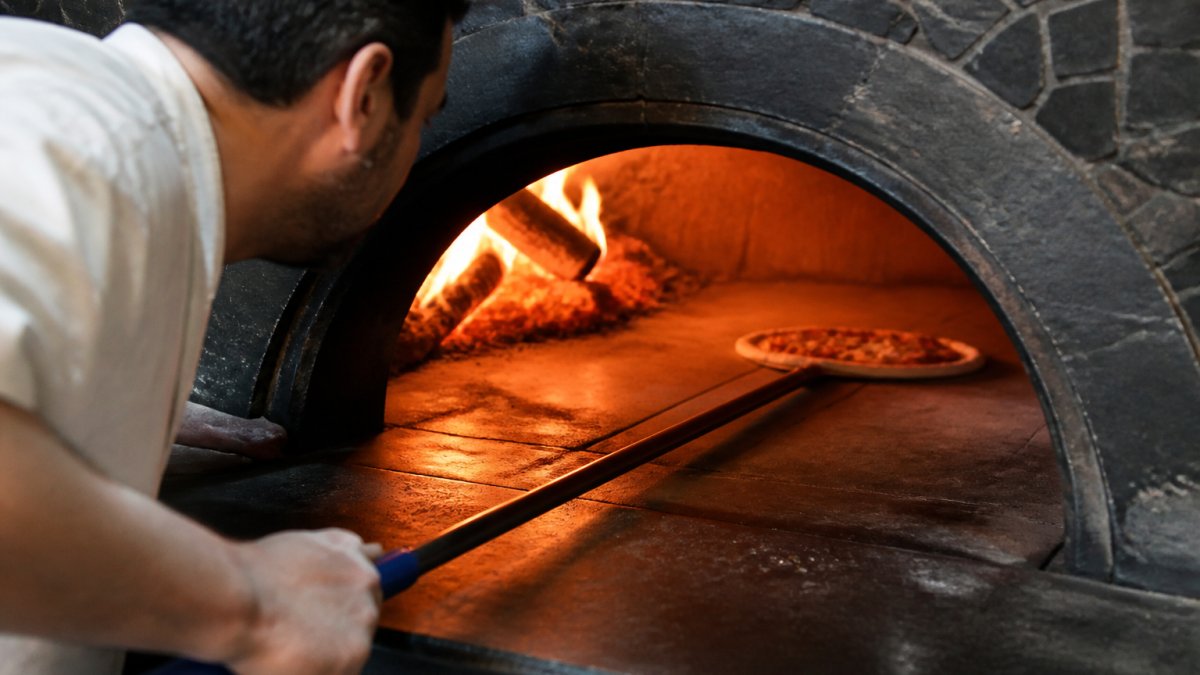
The bake is also where skill matters most. A high-heat oven punishes inattention: too long and the edge burns, too short and the center is raw.
Craft is the whole point here, and our guide to why local pizza tastes better goes deeper into how the bake and the hands behind it shape the final slice.
Cost Per Serving: A Like-for-Like Comparison
Menu prices are the least useful number on the board. Divide the total price by realistic servings and add the extras a cheaper pizza usually requires before comparing. For current prices, check our website or request a quote.
Use this like-for-like framework before you order:
- Count realistic servings, not slices. A hungry adult often eats 2-3 slices of a thin artisan pie and 3-4 slices of a thicker chain pie. Write down the number of people and the number of slices each will actually eat.
- Divide total price by realistic servings. Include tax and delivery fees if you are comparing delivery to pickup. This is your true cost per person.
- Add the cost of making the cheaper pizza satisfying. Chain pizzas are often priced to invite add-ons: extra cheese, a second topping, garlic dip, or a side. Add those to the chain total before comparing.
- Account for leftovers. Artisan pizza often reheats better because the crust has more structure and the cheese has less free oil; a chain pizza can turn greasy and limp the next day. If leftovers replace a $10 lunch, subtract that from the effective cost.
- Compare the same occasion. A family movie night, a solo weeknight dinner, and a dinner party have different serving realities. Compare within the occasion, not across it.
| What You Are Comparing | What to Measure | What It Tells You |
|---|---|---|
| Two pizzas of different sizes | Total price ÷ realistic servings | True cost per person |
| Artisan vs chain, same size | Ingredient and labor inputs plus add-on costs | Whether the premium is justified |
| Family order vs individual | Total cost for the table including sides | Best value for a group |
| Delivery vs pickup | Fees, tip, and timing | Real convenience cost |
| Now vs leftovers | Cost of the next meal replaced | Effective cost per meal |
Pricing depends on size, toppings, and order type, so check the menu for current prices rather than relying on a general figure. The method above works with any menu, at any pizzeria, without needing a spreadsheet.
A Practical Guide to Judging Artisan Pizza Quality
Judging artisan pizza quality comes down to five checks you can run on any slice: crust, sauce, cheese, toppings, and balance. If a pizza passes all five, the premium is doing its job.
- Crust: Look for blisters and a chew that gives way. A soggy center or a burnt edge that tastes of charcoal is a miss.
- Sauce: It should taste of tomato and seasoning, not sugar.
- Cheese: It should stretch and brown, not sit in a pool of grease.
If you want a fuller framework, our guide to what makes high quality pizza walks through each marker in detail. The short version: good pizza tastes balanced, and you should be able to taste every element.
When Artisan Pizza Is and Is Not Worth the Premium
Artisan pizza is worth the premium when the people eating it will notice the difference and the occasion calls for food that is the point of the meal. It is not worth it when pizza is fuel, when the crowd is too large for the per-serving math to work, or when the toppings you plan to add would bury the crust and sauce you paid for.
Worth it when:
- The food is the centerpiece. A casual gathering, a birthday, or a date night where the pizza is the reason people came together.
- The table cares about crust and ingredients. If someone at the table will comment on the chew of the crust or the taste of the sauce, the premium is doing real work.
- You want a meal that satisfies without sides. A well-made artisan pizza often needs nothing else; a chain pizza frequently needs dips, sides, or extra cheese to feel complete, which erases part of the price gap.
Skip the premium when:
- It is a quick solo dinner and speed matters more than flavor. Convenience has real value, and a weeknight solo meal is rarely the moment to optimize for crust.
- You are feeding a large crowd on a tight budget and quantity is the priority. The per-serving math usually favors larger, denser pizzas when the goal is to fill a table cheaply.
- You plan to load the pizza with heavy toppings. If the base quality will be buried under five toppings and a heavy sauce, you are paying for something you will not taste.
A practical rule of thumb: if the per-serving premium is modest and the occasion is one where people will notice, order the artisan pie. If the per-serving premium is steep or the crowd is large and budget-focused, order the larger, cheaper pizza and save the artisan pie for the meal where it will be appreciated. Neither choice is wrong; the mistake is paying for craft you do not intend to taste.
Ordering From a Family-Owned Pizzeria You Can Trust
Trust is the part of the price you cannot taste, and it matters just as much. A family-owned pizzeria stakes its name on every order, which is why consistency and service tend to be personal rather than scripted.
Famous Pizza is a family-owned and operated business with over 20 years of experience, and we aim to treat every customer like family. If you want to understand why local ownership matters, read our piece on the benefits of family-owned pizzerias.
We are not going to tell you artisan pizza is right for every single dinner. We will tell you that when you want a meal worth sitting down for, the difference is real, and it is on the plate.
Frequently Asked Questions
What are the key differences between artisan pizza and regular pizza?
Artisan pizza is built on slower-fermented dough, house-made sauce, and higher-quality cheese, then baked in a wood-fired or brick oven at very high heat. Regular or chain pizza typically uses faster dough production, pre-shredded cheese blends, and conveyor ovens. The result shows up in the crust: artisan pies get a blistered, chewy edge and a lighter texture, while regular pizza tends to be more uniform and denser. Toppings on artisan pies are usually fewer but more distinctive, and portion sizes vary by pizzeria.
Why does artisan pizza cost more than chain pizza?
Several costs stack up. Long-fermented dough ties up refrigerator space and labor. Skilled oven work and specialty ingredients also tend to cost more than commodity versions. Pricing depends on the specific pizzeria and menu, so check the restaurant's current menu for exact figures rather than assuming a fixed premium.
Is artisan pizza worth the price for a weeknight family dinner?
It depends on how you measure value. If you are feeding three kids who mainly care about cheese and speed, a lower-cost chain pie may serve the purpose. If the meal is the point, a personal artisan pizza often delivers more satisfaction per dollar because the crust and toppings carry more flavor, so people eat less before feeling full. Compare cost per serving rather than sticker price. A smaller pie at a higher price can be reasonable value if it replaces a larger, less satisfying order.
What ingredients should I look for in a high-quality artisan pizza?
Start with the flour and the fermentation time. Look for whole-milk mozzarella rather than a processed blend, and a sauce made from crushed tomatoes with little added sugar. Ask about dietary needs too, since allergen handling varies by kitchen. A pizzeria that can explain where its ingredients come from is usually the one paying attention to quality.
The next time you weigh a pizza order, start with what you actually want from the meal: speed, quantity, or flavor worth the price. If it is the third, Famous Pizza is built for exactly that, with a family-owned kitchen, a rewards program that rewards regulars, and a warm, welcoming table for the whole family. Get started with Famous Pizza and order a pie that earns its price.