 Ultimate guide
What Defines Authentic Pizza Grinders: A Complete Guide
Last Updated: October 23, 2026
Quick Summary
Pizza grinders are hot, baked sandwiches served in a split long roll and filled with pizza-style components: tomato sauce, melted cheese, and pizza toppings such as pepperoni, sausage, mushrooms, or peppers. The roll is filled and toasted or baked until the cheese melts and the bread crisps, delivering pizza flavor in handheld form.
- A grinder implies heat and melted cheese, while a sub can be served entirely cold.
- Pre-toast the split roll cut side first to create a moisture barrier against sogginess.
- Spread a thin, even layer of reduced tomato sauce and resist adding more before baking.
- Bake at 400°F for 8-10 minutes until cheese is melted and browning at the edges.
- Let the grinder rest 2 minutes before cutting so the cheese sets and filling stays put.
Table of Contents
- What Is a Pizza Grinder? A Clear Definition
- Pizza Grinder vs Sub: What Actually Separates Them
- Authentic Pizza Grinder Ingredients and Why Each One Matters
- Pizza Grinder Bread: The Crust Decisions That Make or Break It
- How to Make a Pizza Grinder at Home (With Troubleshooting)
- The Authenticity Checklist: Judging a Pizza Grinder in Five Minutes
- Frequently Asked Questions
What Is a Pizza Grinder? A Clear Definition
Pizza grinders are hot, baked sandwiches served in a long roll and filled with pizza-style components: tomato sauce, melted cheese, and typical pizza toppings such as pepperoni, sausage, mushrooms, or peppers. The roll is split, filled, and toasted or baked until the cheese melts and the bread crisps.
That definition matters because the term gets used loosely. The distinction is real, and it comes down to construction, bread, and heat.
The key markers of a true pizza grinder:
- A split long roll, not a folded or sealed dough pocket
- Sauce applied inside the sandwich, not served on the side
- Cheese melted under heat, not sliced cold
- Toppings layered in pizza proportions rather than deli-meat quantities
Grinder, Sub, Hero, Hoagie: Regional Terminology
Regional vocabulary confuses this topic more than anything else. The same long sandwich carries different names depending on where you order it, and the naming often signals something about how the sandwich is built.
The practical difference is temperature and construction. A grinder implies heat and melted cheese. A sub can be entirely cold. When you order a pizza grinder, you are asking for the grinder treatment applied to pizza fillings, and that expectation of heat is what separates a good one from a disappointing one.
Pizza Grinder vs Sub: What Actually Separates Them
The clearest single difference is that a pizza grinder is built to be baked, while a sub is built to be assembled. That one decision cascades through every other choice: bread, sauce, cheese, and topping order.
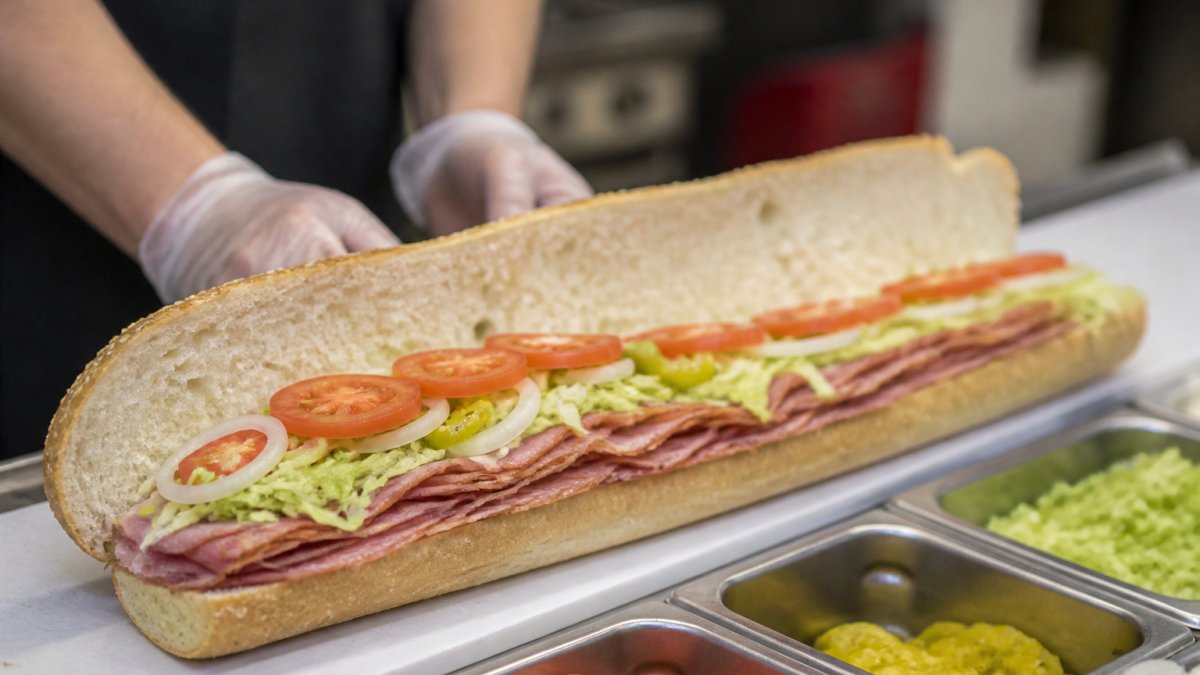
A sub is typically assembled cold and served cold or at room temperature. Deli meats, lettuce, tomato, and dressing go in and the sandwich is finished.
| Feature | Pizza Grinder | Classic Sub |
|---|---|---|
| Serving temperature | Hot, baked or toasted | Cold or room temperature |
| Cheese | Melted under heat | Sliced, cold |
| Sauce | Tomato sauce inside the roll | Often none, or oil and vinegar |
| Bread requirement | Sturdy roll that holds up to heat | Softer roll is acceptable |
| Toppings | Pizza toppings, layered | Deli meats and vegetables |
| Typical failure | Soggy from excess sauce | Dry from too little moisture |
Here is the part most people miss: the sauce decision is the whole ballgame. A sub can hide a dry roll behind dressing.
Authentic Pizza Grinder Ingredients and Why Each One Matters
Authenticity in a pizza grinder comes down to four ingredient categories, and each one has a job. Get any of them wrong and the sandwich reads as a generic hot sub rather than a pizza in handheld form.
Bread must be sturdy enough to hold sauce and survive heat without going limp. A soft, airy roll collapses.
Sauce should be a cooked tomato sauce, seasoned and reduced rather than watery.
Cheese needs to melt well. Low-moisture mozzarella is the standard for stretch and browning.
Toppings should be pizza toppings in pizza quantities. Pepperoni, sausage, mushrooms, onions, and peppers all work. Deli meats do not, because they change the sandwich's identity entirely.
Cheese, Sauce, and Topping Trade-Offs
Every ingredient choice trades something away, and understanding those trades is what separates a confident cook from someone following a recipe blindly.
- More cheese gives better binding and richness, but too much makes the sandwich heavy and greasy.
- Wetter sauce tastes brighter but risks a soggy roll; reduce it down for a grinder.
- Cured meats like pepperoni release fat into the sandwich, which adds flavor but can pool at the bottom of the roll.
- Vegetables add texture but release water; sauté mushrooms and peppers first if you want a crisp result.
Pizza Grinder Bread: The Crust Decisions That Make or Break It
Bread is the decision that determines whether your pizza grinder succeeds, and it is the one home cooks get wrong most often.
A crusty Italian roll is the safest choice. It has enough structure to stay intact and enough surface to brown.
For a more artisanal result, look at flour choice.
The technique that matters most is pre-toasting. Split the roll and toast the interior cut side before adding sauce. This creates a moisture barrier and is the single most effective step against sogginess.
How to Make a Pizza Grinder at Home (With Troubleshooting)
Step 1: Prepare the roll. Split a crusty Italian roll lengthwise without cutting all the way through. Open it flat.
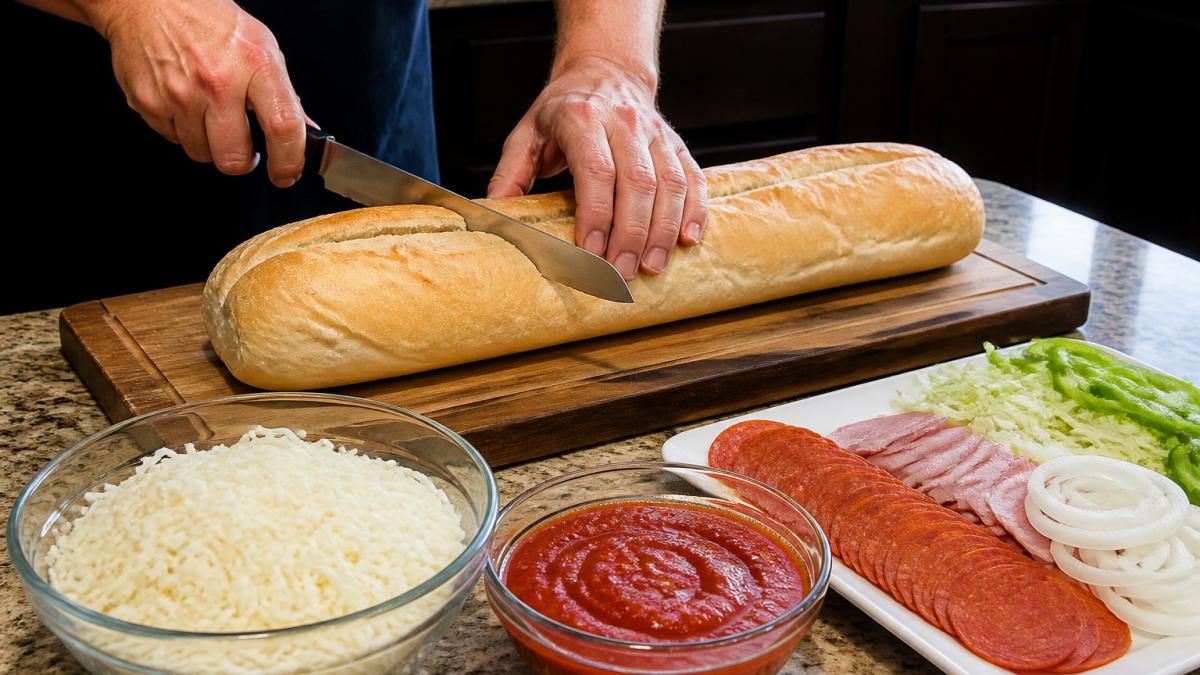
Step 2: Pre-toast. Place cut side up on a baking sheet and toast at 400°F for 3-4 minutes until the interior is dry and lightly golden. This is the anti-soggy step.
Step 3: Sauce lightly. Spread a thin, even layer of reduced tomato sauce across both halves. Resist adding more.
Step 5: Bake. Return to the oven for 8-10 minutes until the cheese is fully melted and beginning to brown at the edges.
Step 6: Rest and serve. Let the grinder sit for 2 minutes before cutting. This lets the cheese set slightly so the filling does not slide out.
Common Mistakes and How to Fix Them
Most home pizza grinder failures trace back to four fixable problems. Here is how to diagnose and correct each one.
| Problem | Cause | Fix |
|---|---|---|
| Soggy roll | Too much sauce, no pre-toast | Toast cut side first, halve the sauce |
| Cheese not melting | Pre-shredded cheese, oven too cool | Shred from a block, raise oven to 400°F |
| Toppings falling out | Overloaded, cheese only underneath | Add a binding cheese layer on top |
| Burnt edges, cold center | Oven too hot, roll too thick | Lower to 375°F and extend bake time |
The burnt-yet-cold problem is worth calling out because it is the most frustrating. A thick roll in a very hot oven browns on the outside before heat reaches the center. Lowering the temperature and giving it more time solves it every time.
The Authenticity Checklist: Judging a Pizza Grinder in Five Minutes
You can judge whether a pizza grinder is authentic in about five minutes using a short checklist. The criteria below are the ones that actually predict quality, in the order they matter.
- The roll is toasted, not steamed. Look for a dry, crisp interior cut side.
- Sauce is inside and measured. You should taste tomato, not feel wetness.
- Cheese is fully melted and slightly browned. Cold or unmelted cheese is a fail.
- Toppings are pizza toppings, not deli meat. Pepperoni and sausage, yes. Ham and lettuce, no.
- The sandwich holds together when picked up. If it collapses, the balance is wrong.
- It is served hot. A lukewarm pizza grinder means it sat too long after baking.
The checklist is deliberately short. Authenticity is not about obscure ingredients or a specific oven type; it is about whether the sandwich was built with heat and balance in mind.
One honest limitation: this checklist will not tell you whether you personally prefer a particular style. Some people want a heavier, cheesier grinder and some want a lighter one.
Great pizza grinders come down to construction discipline: a sturdy roll, a measured sauce, properly melted cheese, and enough heat to bring it together. That is exactly the standard we hold ourselves to at Famous Pizza, where our family-owned kitchen has spent over 20 years serving Rhode Island and Massachusetts neighbors the kind of food we would put on our own table.
Frequently Asked Questions
What defines an authentic pizza grinder?
An authentic pizza grinder is a hot, oven-baked sandwich built on a long Italian-style roll and layered with pizza components: tomato sauce, melted cheese, and toppings such as pepperoni, sausage, or peppers. What separates it from a cold deli sandwich is the baking step, which melts the cheese and melds the sauce into the bread. The roll should hold up under sauce without turning soggy, and the cheese should stretch rather than sit in a solid slab. Those two texture cues tell you more about authenticity than any menu label.
What is the difference between a pizza grinder and a sub?
The pizza grinder vs sub distinction comes down to heat, sauce, and construction. A sub is typically a cold-cut sandwich with lettuce, tomato, and mayo or oil, assembled after the bread is baked. A pizza grinder is assembled with pizza ingredients and then baked or broiled so the cheese melts and the sauce warms through. Some shops use the terms interchangeably, which is why regional terminology matters. If the sandwich comes out hot with melted cheese and tomato sauce, you are eating a pizza grinder regardless of what the menu calls it.
What bread is traditionally used for a pizza grinder?
Pizza grinder bread is usually a long, soft Italian roll or a hoagie-style roll with a thin, slightly crisp crust and a tender interior. The roll needs enough structure to hold sauce and melted cheese without collapsing, but it should not be so crusty that it tears up your mouth. Many shops brush the cut sides with garlic butter or oil and toast them before filling, which creates a barrier against moisture. A roll that is too soft turns soggy in minutes; one that is too hard cracks when you bite it.
What ingredients go into an authentic pizza grinder?
Authentic pizza grinder ingredients start with a long Italian roll, tomato sauce, and a melting cheese such as mozzarella or brick cheese. From there, traditional fillings include pepperoni, Italian sausage, mushrooms, green peppers, onions, and black olives. Some versions add ham, salami, or a dusting of oregano and grated Parmesan. The sauce should be thick enough to stay in the sandwich rather than running out the end. Keeping the ingredient list short and letting the cheese and sauce carry the flavor is closer to the original than loading on eight toppings.
Should a pizza grinder be served hot or cold?
A pizza grinder should be served hot. The defining step is baking or broiling the assembled sandwich so the cheese melts and the sauce warms into the bread. Serving it cold turns it into a ordinary sub and loses the pizza character that makes it distinct. If you are making one at home, let it rest for a minute or two after coming out of the oven so the cheese sets slightly and does not slide off when you cut it. Eat it within ten minutes for the best texture.
How is a pizza grinder different from a pizza sandwich?
The terms overlap, but a pizza grinder usually implies a specific build: a long Italian roll, pizza sauce, melted cheese, and savory toppings, baked until the cheese bubbles. A pizza sandwich is a broader label that can include toasted bread, flatbread, or even two slices of pizza with fillings between them. The grinder is defined by the long roll and the hot, saucy, cheesy filling. If you are ordering and want the classic version, ask whether the sandwich is baked with sauce and cheese inside the roll.
What makes a pizza grinder taste authentic?
Three things drive authentic flavor: a roll that is toasted or brushed with garlic butter before filling, a thick tomato sauce that tastes cooked rather than raw, and a cheese that melts into strings instead of pooling grease. Oregano and a little grated Parmesan finish the flavor profile. High heat matters too, because a fast bake at high temperature melts the cheese before the bread dries out. Shops that bake at lower heat for longer tend to produce a drier, chewier sandwich.