 comparison
Fresh Ingredients vs Frozen Pizza: Which Wins?
Table of Contents
- Fresh Ingredients vs Frozen Pizza: The Quick Comparison
- Fresh Pizza Nutrition vs Frozen: Sodium, Calories, and Additives
- Frozen Pizza Ingredients: What's Actually in the Box
- Fresh Pizza Dough vs Frozen Dough: Texture, Rise, and Crust
- Freezing Fresh Pizza: How to Do It Without Ruining the Crust
- Cost Per Serving and Convenience: The Weeknight Reality
- Cooking Methods and Flavor: Oven Temperature, Maillard Reaction, and Reheating
- Which One Should You Pick?
- Frequently Asked Questions
Last Updated: October 9, 2026
Fresh Ingredients vs Frozen Pizza: The Quick Comparison
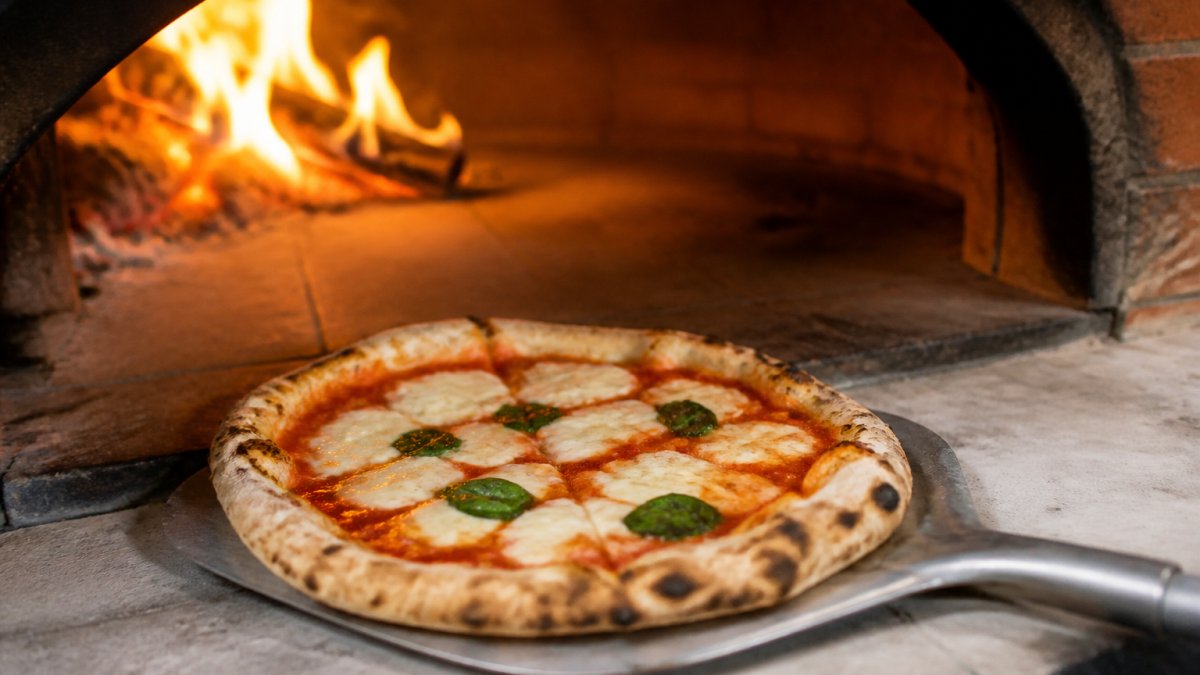
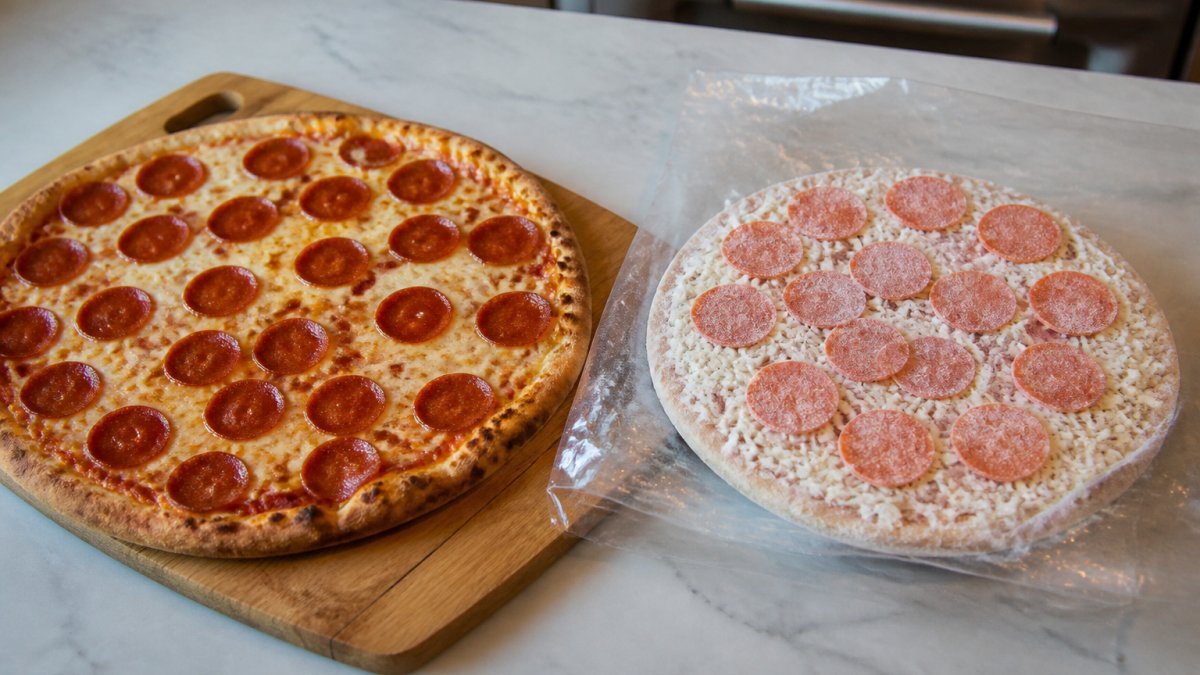
The fresh ingredients vs frozen pizza debate comes down to what you value most: control over what you eat or speed on a Tuesday night. Fresh pizza wins on nutrition, texture, and flavor; frozen pizza wins on cost and convenience. At Famous Pizza, we have spent more than 20 years watching this trade-off play out every week.
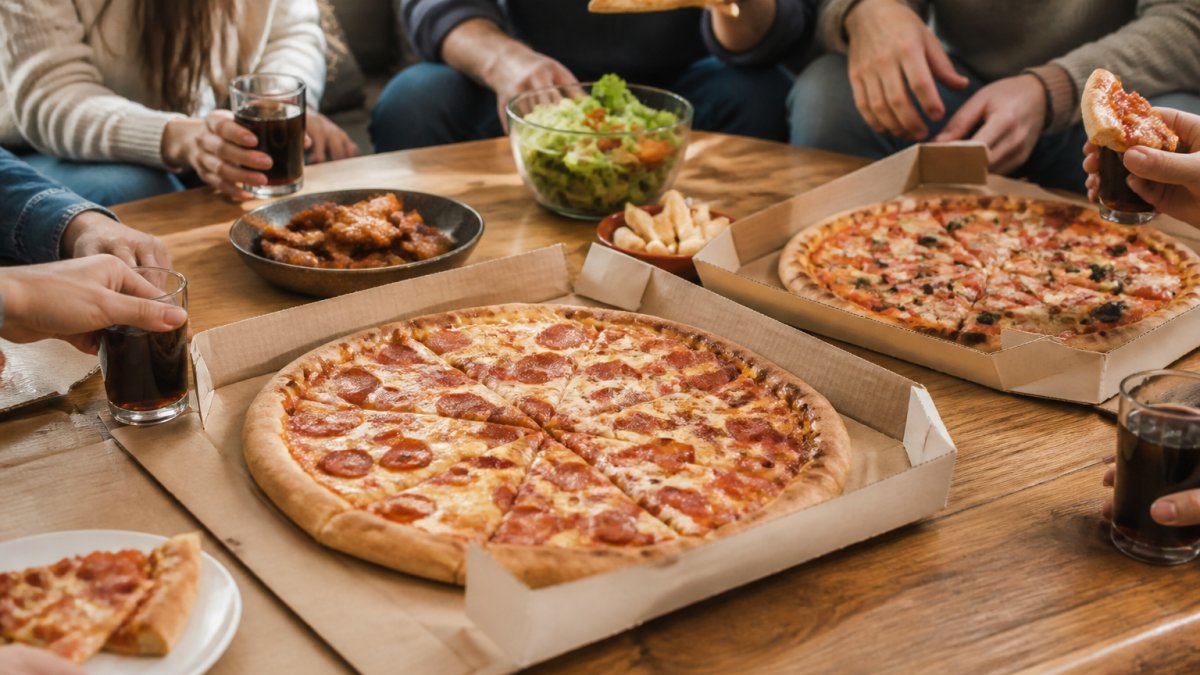
A fresh pie gives you real dough that ferments and rises, cheese you can identify, and a crust that browns instead of steams. A frozen pie gives you a meal in 12 minutes with no planning, no cleanup, and a hard-to-argue-with price. Most families we serve in Rhode Island and Massachusetts land in the middle: frozen for emergencies, fresh for the nights that matter.
How We Evaluated Fresh and Frozen Pizza
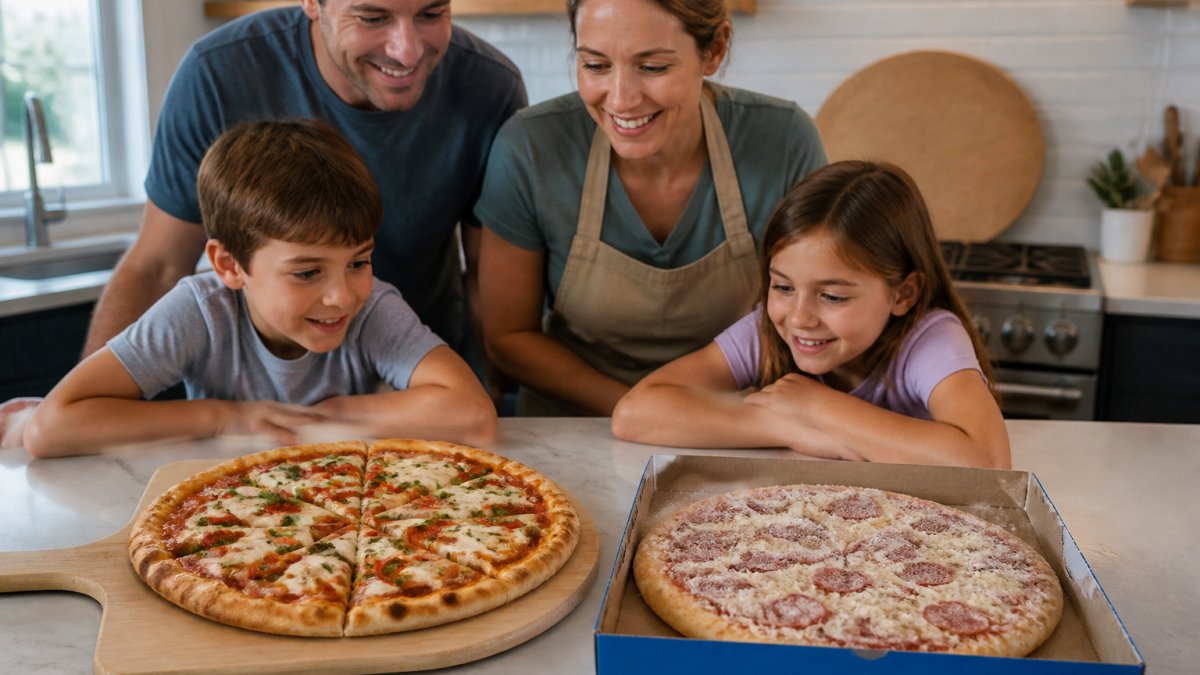
We compared both options across six factors: nutrition, ingredient quality, crust and dough behavior, freezing and storage, cost per serving, and cooking performance. We used ingredient labels on widely sold frozen brands and standard techniques any home cook or pizzeria uses, no lab testing, no sponsored scores.
| Factor | Fresh Pizza | Frozen Pizza |
|---|---|---|
| Nutrition | You control sodium and additives | Higher sodium, more preservatives |
| Crust texture | Fermented dough, chewy rise | Dense or spongy, depends on brand |
| Cost per serving | Higher upfront, feeds a group | Lower per pie, smaller portions |
| Convenience | Planning and cleanup required | Oven to table in about 12 minutes |
| Flavor | Maillard browning, fresh aroma | Flat profile, steam-reheated toppings |
| Best for | Family dinners, gatherings | Late nights, backups, tight budgets |
Fresh Pizza Nutrition vs Frozen: Sodium, Calories, and Additives
Fresh pizza nutrition vs frozen comes down to one word: control. When you build a pie yourself or order from a shop that makes its own dough, you decide how much salt, cheese, and oil goes on it. Frozen pizza is engineered for shelf life, and that shows up on the label.
Sodium is the biggest gap. Frozen pies rely on salt and preservatives to survive the freezer and taste full after reheating, so a single personal-size pie can carry a large share of a day's recommended sodium. Fresh dough made in-house needs far less.
Caloric density also shifts. Frozen pizzas often pack more cheese and oil per square inch to compensate for a crust that loses texture in the freezer. A thin crust fresh pie with a normal cheese layer is usually lighter per slice.
Frozen pizza is a par-baked or raw pizza assembled, flash frozen, and packaged for retail sale, designed to be stored for months and reheated at home. That definition matters, because everything about the category, from the additives to the crust texture, flows from the need to survive freezing and reheating.
Frozen Pizza Ingredients: What's Actually in the Box
Frozen pizza ingredients vary widely by brand, and the price tag usually tells you which tier you are in. Premium frozen lines lean on better sauce and real cheese. Budget lines lean on fillers, oils, and additives that keep the pie stable for a year.
Here is how the common tiers break down:
- Budget pies: enriched flour, vegetable oil blends, modified food starch, and a cheese blend that may include skim milk and oil rather than pure mozzarella
- Mid-tier pies: real mozzarella, tomato sauce from concentrate, and fewer stabilizers, often with a rising-crust formula
- Premium frozen pies: signature sauces, higher-quality cheese, and cleaner labels, sold at a price that approaches a fresh pie
The trade-off is real. A premium frozen pizza from a brand like Rao's Homemade or Amy's Kitchen uses better ingredients, but you pay for them. A budget multi-pack keeps the freezer stocked for less, and the ingredient list reflects that.
Fresh Pizza Dough vs Frozen Dough: Texture, Rise, and Crust
Fresh pizza dough vs frozen dough is where the difference becomes obvious in one bite. Fresh dough is alive. Yeast activity, time, and warmth build gas bubbles that create an open, chewy crumb. Frozen dough is built to survive a freeze-thaw cycle, and that cycle damages the gluten structure.
What most guides miss is that the crust problem starts before the oven. When dough freezes, ice crystals puncture the gluten network, so the baked result is a denser, more uniform crumb with less chew. Manufacturers work around this with dough conditioners and par-baking, but they cannot fully undo the damage.
Texture also depends on style. A deep pan frozen pizza leans on a thick, bread-like base that hides a weak crumb, while a thin crust frozen pie can turn cracker-crisp, which some people genuinely prefer. Fresh dough gives you the range: thin and snappy, or thick and airy.
Freezing Fresh Pizza: How to Do It Without Ruining the Crust
Freezing fresh pizza is the move most people never try, and it is the best of both worlds: fresh dough and real ingredients on a weeknight without frozen-pizza prices or texture. The trick is to freeze it at the right stage.
Here is the method we would use at home:
- Par-bake the crust. Roll your dough, top it with sauce only, and bake it at a high oven temperature for a few minutes until it sets but does not brown.
- Cool it completely. A warm crust steams in the wrap and turns soggy.
- Add cheese and toppings. Keep them light. Heavy wet toppings like fresh tomato or pineapple freeze poorly.
- Wrap tight, then bag. Plastic wrap against the surface, then a freezer bag with the air pressed out.
- Freeze flat. Give it a level shelf so the crust holds its shape.
- Reheat from frozen. Bake directly on a hot stone or steel at a high temperature. No thawing.
Flash freezing, the technique commercial brands use, freezes a pie fast enough that ice crystals stay small. Your home freezer cannot match that speed, which is why par-baking first matters so much. It sets the crust before the freeze can wreck it.
Cost Per Serving and Convenience: The Weeknight Reality
Cost per serving flips depending on how you count it, and most comparisons stop at the sticker price.
A budget frozen multi-pack looks cheapest at the register, but those pies are typically smaller and thinner than a fresh pie, so a family of four often needs two to feel full.
The hidden cost of frozen is waste.
The hidden cost of fresh is time. Dough needs to ferment, toppings need to be prepped, and cleanup takes longer than sliding a box into the oven.
Convenience is where frozen earns its place. A frozen pie goes from freezer to plate in about 12 minutes with no planning, no dough, and no cleanup beyond a sheet pan.
Storage life is the other half of convenience. Frozen pies hold for months in a standard freezer, which makes them a genuine backup meal.
This is where a local shop earns its keep: you get fresh ingredients and real dough without doing any of the work, and you skip the waste of a freezer full of forgotten pies.
Cooking Methods and Flavor: Oven Temperature, Maillard Reaction, and Reheating
The Maillard reaction is the browning and flavor development that happens when amino acids and reducing sugars react under high heat, and it is the single biggest reason fresh pizza tastes better.
The reaction needs three things: high heat, a dry surface, and time. Fresh dough baked at a high oven temperature hits all three, so the surface dries, the sugars and proteins brown, and the crust develops savory, roasted notes.
Moisture is the second problem. The Maillard reaction stalls when the surface is wet, because water caps the temperature at the boiling point until it evaporates.
Thermal conductivity matters too. A baking stone or steel pulls heat into the dough fast, driving a better rise and a crisper bottom, the fast heat transfer that gives a fresh pie its blistered, chewy crust.
Oven temperature is the lever most home cooks miss.
Reheating is its own skill. A skillet on the stovetop crisps the bottom while the cheese warms, getting you closer to fresh texture than any other home method. A microwave gives you rubber because it heats water and steam rather than browning the surface.
Which One Should You Pick?
Pick fresh when the meal matters: family dinners, gatherings, or any night you want real flavor. Pick frozen when time and budget are the only things on the table. Most households need both.
Here is the honest split:
- Choose fresh if you care about sodium, additives, and crust texture, or if you are feeding a group
- Choose frozen if you need speed, a low price, or a backup meal in the freezer
- Choose local if you want fresh ingredients without the work
The real challenge is not choosing between fresh ingredients and frozen pizza. It is finding a fresh pie that shows up consistent every single time, with a crust that is never burnt or soggy and a Friday-night delivery that does not keep your family waiting. That is the problem Famous Pizza has solved for more than 20 years as a family-owned shop, with hand-made dough, high-quality ingredients, a warm welcome whether you dine in or order out, and a rewards program that actually gives regulars something back. Order online and get a fresh, flavorful pizza that beats anything in your freezer.
Frequently Asked Questions
Are frozen pizzas processed?
Yes, most frozen pizzas are processed foods. They typically contain preservatives, added sodium, and dough conditioners to survive freezing and reheating. However, some brands like Amy's Kitchen use organic ingredients and avoid GMOs, offering a less processed option. Reading the ingredient label is the fastest way to tell how processed a frozen pizza really is.
Is fresh pizza healthier than frozen pizza?
Fresh pizza often has less sodium and fewer additives because it does not need preservatives to extend shelf life. A fresh pizza made with homemade dough and real cheese can be lower in saturated fat and calories per slice than many frozen options. That said, a loaded meat-topped fresh pizza can still be high in calories, so toppings matter as much as the fresh-versus-frozen choice.
Can you freeze a fresh pizza before baking it?
Yes, you can freeze a fresh pizza before baking. Assemble the pizza on a parchment-lined tray, freeze it uncovered until solid, then wrap it tightly in plastic and foil. It keeps for up to two months. When ready to bake, cook it from frozen at 425°F to 450°F, adding a few extra minutes. This locks in the fresh dough flavor and avoids the sogginess that can happen with thawed dough.
What is the 2-hour rule for pizza?
The 2-hour rule from the USDA says perishable food, including pizza, should not sit at room temperature for more than two hours. After that, bacteria can multiply to unsafe levels. If the room is above 90°F, the limit drops to one hour. Refrigerate leftovers promptly in shallow containers, and reheat to 165°F before eating.
How does frozen pizza dough differ from fresh pizza dough?
Frozen pizza dough is usually par-baked or flash-frozen to stop yeast activity, which can leave it denser and less flavorful after baking. Fresh pizza dough continues to ferment, developing more complex flavor and a better rise. Frozen dough often contains dough conditioners and extra sugar to compensate, while fresh dough relies on time and yeast for its texture and taste.