 listicle
Why Support Local Family Pizzerias: A 2026 Guide
Table of Contents
- The Economic Impact of Small Businesses: Where Your Pizza Dollar Goes
- Fresh Ingredients and Food Quality: Why Family-Owned Pizzerias Cook Differently
- Personalized Customer Service vs. Corporate Chains
- How Local Pizzerias Build Community and Neighborhood Identity
- How to Support Small Businesses in Your Community: A Practical Checklist
- Finding the Best Pizza in Warwick RI and Nearby Communities
- Sustainability Beyond Carbon Footprint: What Local Pizzerias Do Differently
- Conclusion: Every Slice Supports Something Bigger
- Frequently Asked Questions
Last Updated: September 30, 2026
The Economic Impact of Small Businesses: Where Your Pizza Dollar Goes
When you spend money at one of your local family pizzerias, far more of it stays in your neighborhood than most people realize. This guide from Famous Pizza explains why that matters, and how every order ripples outward through the local economy.
Local family pizzerias keep a larger share of each dollar circulating nearby. National chains send profits to headquarters and shareholders elsewhere. Local owners reinvest in their own communities because that is where they live, shop, and raise families.
The Multiplier Effect Explained
The multiplier effect is the idea that money spent at a local business gets re-spent locally, creating additional economic activity. A dollar spent at a neighborhood pizzeria pays local staff, who then spend it at nearby shops, which pay their own employees, and so on.
Most articles stop there. The mechanism is worth spelling out, because it is what separates a real economic argument from a slogan.
Picture a single $20 order. At a family-owned shop, a meaningful share goes to the cook and counter staff who live in the same town, to a regional distributor or produce supplier, and to the owner, who is likely to spend that profit at a local hardware store, a local accountant, or a local school fundraiser. Each of those recipients then spends again nearby. Economists call the number of times a dollar is re-spent within a region its local multiplier. Independent businesses tend to produce a higher local multiplier than chains because more of their cost structure, labor, ownership profit, and often suppliers, is anchored in the region.
At a chain outlet, the same $20 splits differently.
Local Jobs and Tax Revenue That Stay in the Neighborhood
Family-owned restaurants tend to hire locally and keep decision-making close to home. That means wages, tips, and supplier payments circulate within the same community where the food is sold.
Three specific channels are worth naming:
- Wages and tips. Independent shops typically employ a mix of full-time and part-time staff drawn from the surrounding area. Those paychecks get spent at nearby grocery stores, gas stations, and other small businesses.
- Local procurement. Family pizzerias often buy from regional distributors, area farms, and neighborhood vendors rather than a single national supply contract. That spreads spending across more local businesses.
- Owner profit. When the owner lives in the community, profit is more likely to be reinvested locally, in a second location, a renovation, a sponsorship, or simply household spending at nearby shops.
Small business economic impact resources
Why This Matters More Than It Sounds
The multiplier effect is not an abstraction. It is the difference between a town that has a functioning main street and one that has a row of empty storefronts. Every independent business that closes removes a node from the local circulation loop, and the effect compounds. Choosing a family pizzeria is one of the smallest, most repeatable ways to keep that loop intact.
Fresh Ingredients and Food Quality: Why Family-Owned Pizzerias Cook Differently
Freshness is the clearest difference between a family pizzeria and a large chain. Independent shops often prep ingredients daily and buy from regional suppliers, so what reaches your table tastes closer to how it was made.
Hand-Tossed Dough, Small-Batch Sauces, and Daily Prep
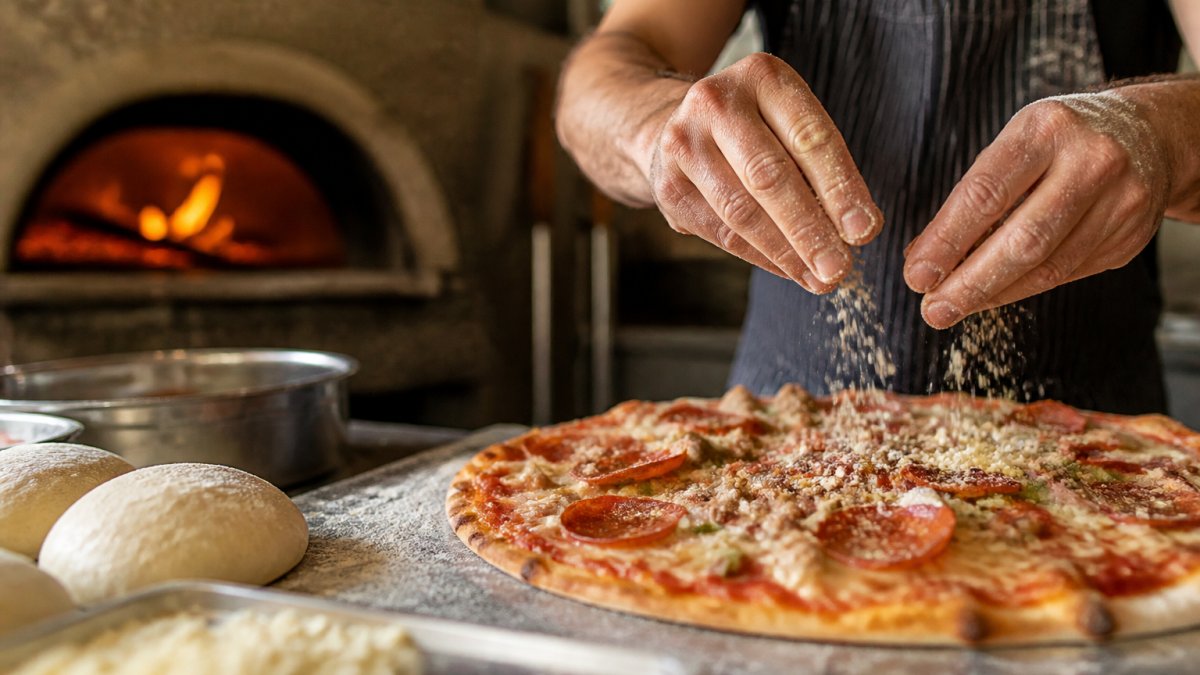
Hand-tossed dough is stretched by hand rather than pressed by machine, which gives the crust a lighter, more uneven texture. Small-batch sauces are typically made in-house, letting cooks adjust seasoning to taste.
Personalized Customer Service vs. Corporate Chains
Personalized service is where local pizzerias win outright. Staff learn regulars by name, remember favorite orders, and adjust to special requests without a script.
If you have a dietary preference or a picky eater at home, ask the staff directly. Independent kitchens can usually adjust a recipe on the spot in ways a chain register simply cannot.
How Local Pizzerias Build Community and Neighborhood Identity
A neighborhood pizzeria often becomes a social anchor, a familiar place where people gather, celebrate, and catch up. That role is hard for a chain to fill because it depends on relationships, not branding.
Sponsorships, Fundraisers, and Youth Sports Support
Many family-owned shops support youth sports, school events, and charity drives because the owners' own children attend those same schools and play on those same fields.
- Team sponsorships. A pizzeria pays a set fee to have its name on a youth jersey or a field banner. The cost is modest, but the visibility is local and the relationship is personal, the owner often knows the players.
- Fundraiser nights. The shop designates an evening where a percentage of sales, or a flat donation per order, goes to a school, church, or nonprofit. Regulars show up specifically to support the cause, and the shop gains new first-time customers.
- Donation requests. Local groups ask for gift cards, pizza for an event, or a cash contribution. Family shops tend to say yes more often than chains because the decision-maker is standing in the kitchen, not in a corporate office.
- Hosting. Some pizzerias open their space for a team party, a scout meeting, or a neighborhood association gathering. That turns the shop into a genuine third place rather than just a takeout counter.
Why the Third Place Is Disappearing, and Why It Matters
Independent gathering spots have been declining for years as national chains, delivery apps, and online ordering pull transactions away from physical neighborhood businesses. Each closure removes a place where neighbors actually see each other.
How to Support Small Businesses in Your Community: A Practical Checklist
Supporting local businesses does not require a big effort. Small, repeatable habits add up faster than occasional grand gestures.
- Order directly from the restaurant instead of a third-party app when possible
- Leave a review and mention the staff or dish you liked
- Attend community events the shop sponsors or hosts
- Recommend the pizzeria to neighbors, coworkers, and friends
- Ask about a loyalty or rewards program and use it
- Share a photo or post about your meal on social media
- Choose local for one meal a week as a starting habit
Finding the Best Pizza in Warwick RI and Nearby Communities
Finding the best pizza in Warwick RI comes down to a few signals: fresh daily prep, a menu that reflects local taste, and staff who know their regulars. Those markers separate a genuine neighborhood shop from a chain outlet.
| What to Check | Strong Sign | Weak Sign |
|---|---|---|
| Dough | Hand-tossed, made daily | Pre-formed, frozen |
| Sauce | Made in-house, small-batch | Uniform, packaged |
| Service | Staff know regulars | Scripted, impersonal |
| Community | Sponsors local events | No local presence |
| Ingredients | Regional, fresh sourcing | Central warehouse supply |
Sustainability Beyond Carbon Footprint: What Local Pizzerias Do Differently
Sustainability at a local pizzeria goes beyond emissions. Shorter supply chains mean less shipping, but the bigger gains come from how a small shop operates day to day.
Conclusion: Every Slice Supports Something Bigger
Choosing a local family pizzeria is a small decision with an outsized effect. It keeps money, jobs, and character in your neighborhood, and it rewards the people who show up for your community.
Frequently Asked Questions
How does supporting local pizzerias impact the local economy?
When you buy from a local family pizzeria, a larger share of your money stays in the neighborhood compared to corporate chains. Local owners hire local staff, use nearby suppliers, and pay taxes that fund community services. This creates a multiplier effect where each dollar circulates through multiple local businesses before leaving the area, supporting jobs and economic development.
What makes a family-owned pizzeria different from a national chain?
Family-owned pizzerias typically make dough fresh daily, offer hand-tossed crusts, and personalize service because the owners live in the community they serve. Chains rely on standardized, often frozen ingredients and scripted interactions. Local shops can adjust recipes, remember regulars' orders, and sponsor neighborhood events in ways corporate locations rarely do.
How can I support small businesses in my community beyond just ordering food?
Leave positive reviews, share social media posts, attend community events they sponsor, and choose them for catering or group orders. Refer friends and family, participate in their loyalty programs, and provide feedback directly. Even small actions like tagging them in a photo or bringing a neighbor for their first visit help local pizzerias grow.
What makes the best pizza in Warwick RI stand out from other options?
The best pizza in Warwick RI comes from shops that prioritize fresh, locally sourced ingredients, consistent hand-tossed crusts, and genuine community ties. Look for pizzerias with strong local reputations, family ownership, and a history of supporting neighborhood events. These factors typically translate to better flavor and a more welcoming dining experience.
The next time you are deciding where to order dinner, remember that the choice reaches further than your table. Famous Pizza offers a warm, welcoming dining environment, a rewards program for customer savings, and meals made to keep your family coming back. Get started with Famous Pizza and turn an ordinary weeknight order into support for your neighborhood.