 how-to
How to Identify Authentic Pizza: A 2026 Guide
Table of Contents
- How to Identify Authentic Pizza: What to Look For First
- Neapolitan Pizza Characteristics: The Gold Standard
- Thin Crust Pizza Characteristics: What the Base Tells You
- Traditional Pizza Ingredients That Signal Quality
- How to Tell If Pizza Is Cooked Through: A Step-by-Step Checklist
- How to Assess Authenticity From a Menu or Photo
- Common Myths About Authentic Pizza
- Frequently Asked Questions
Last Updated: October 16, 2026
How to Identify Authentic Pizza: What to Look For First
Authentic pizza is a thin, sturdy crust with a puffed, charred edge, topped with simple ingredients and baked hot enough to cook through without turning soggy. Learning how to identify authentic pizza comes down to reading the crust, the toppings, and the bake, not the name on the sign. This guide breaks down the exact cues to look for.
Why Authenticity Is About Technique, Not Just Location
A pizzeria can sit in a historic building and still serve a frozen crust. Real authenticity lives in how the dough is made, how long it rests, and how hot the oven runs.
Here's what separates a genuine pie from a lookalike:
- Fermentation time: Slow-risen dough develops flavor and a lighter texture.
- Oven heat: High heat puffs and chars the edge fast.
- Handling: A stretched, not rolled, base keeps air in the rim.
- Restraint: Fewer toppings let the crust and sauce speak.
Many people assume a wood-fired oven is the whole story. It isn't. A skilled maker with the right dough can outperform a careless one with fancy equipment.
USDA food safety and preparation guidance
Neapolitan Pizza Characteristics: The Gold Standard
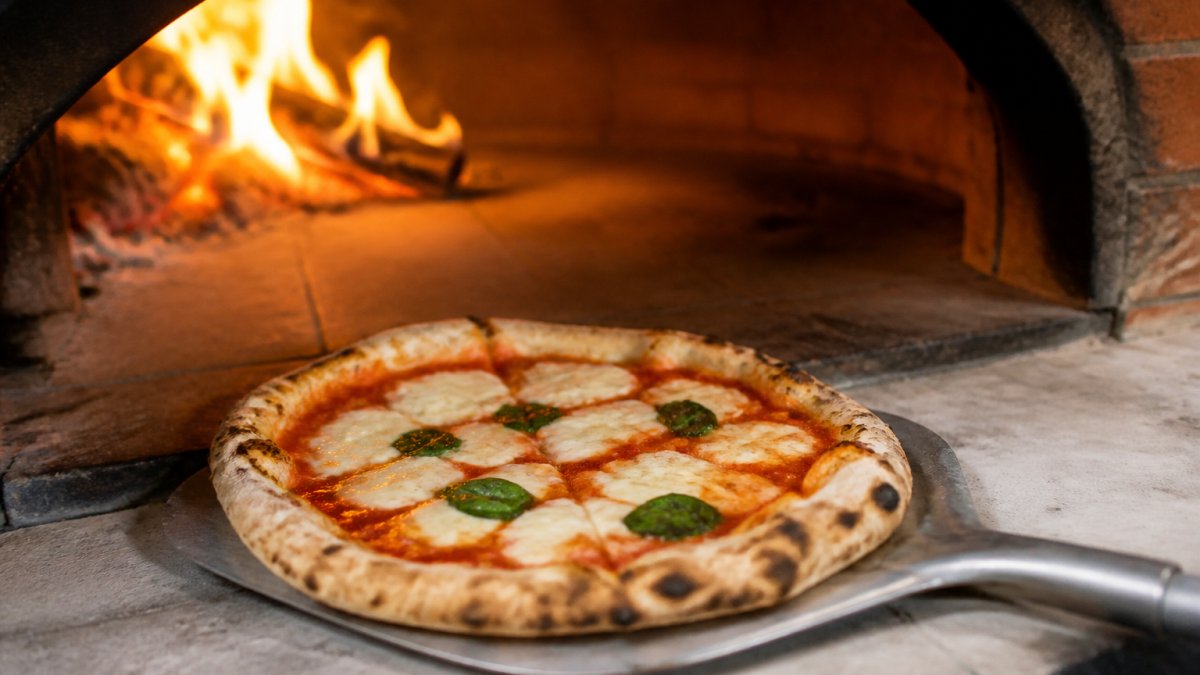
Neapolitan pizza is a style defined by a soft, thin center, a puffy rim called the cornicione, and a fast, very hot bake. The result is a crust with a crisp exterior and a tender interior, often marked by dark spots. But the traits themselves are only half the story, understanding why they appear is what lets you separate a genuine Neapolitan bake from a pie that merely borrows the name.
Why the Cornicione Puffs and the Center Stays Thin
The rim rises because the dough is stretched by hand, not rolled. Rolling compresses the gas pockets that fermentation created; stretching preserves them.
A common pattern among skilled makers is a dough that rests long enough to develop both flavor and extensibility. The exact timing varies by kitchen temperature and yeast amount, but the principle is consistent: more fermentation time means more gas, more flavor, and a lighter crumb.
The Bake: Heat, Speed, and Leopard Spotting
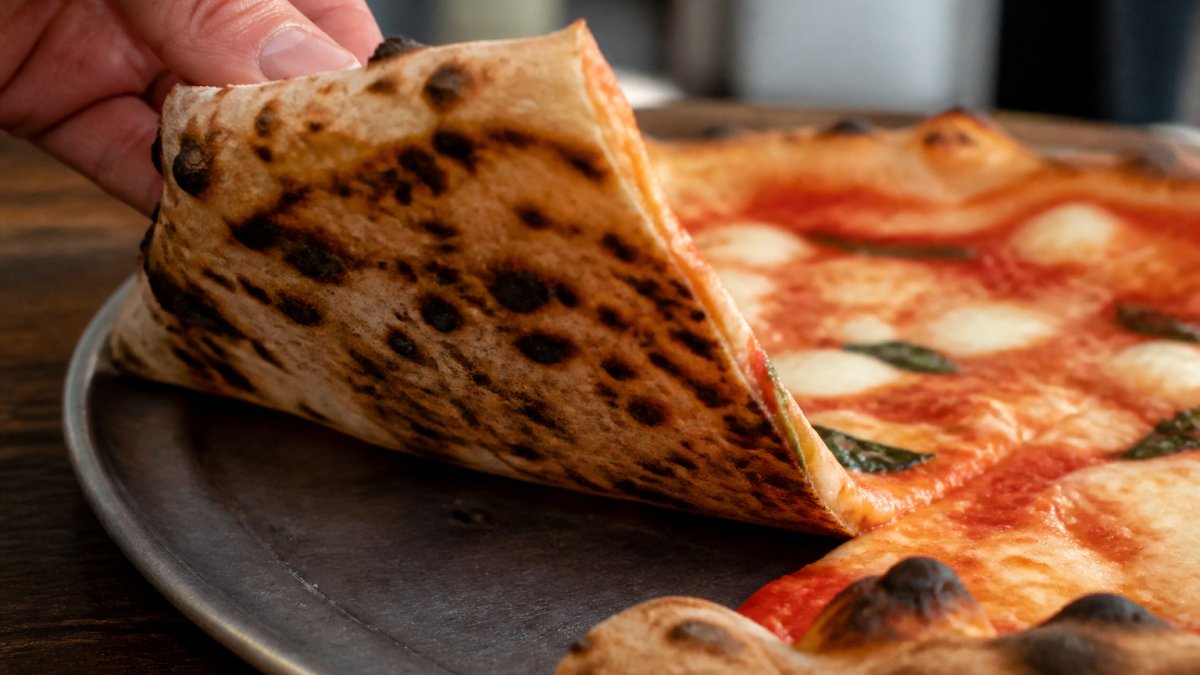
Neapolitan-style pies are traditionally baked very fast at high heat, which is what produces the signature "leopard spotting", small, dark, irregular char marks rather than an even brown.
This is why oven type alone doesn't guarantee authenticity. A wood-fired oven that never reaches proper heat, or a baker who leaves the pie in too long, will still produce a pale or scorched result.
Certification vs. "Neapolitan-Style" on a Menu
Here's where the language gets slippery. A menu that says "Neapolitan-style" is making a broad stylistic claim, not a certified one.
That distinction matters when you're evaluating a pie:
- "Neapolitan-style", a general description of the look and approach. No formal verification implied.
- Certified Neapolitan, the maker has met an external standard for ingredients and method, and usually advertises it.
Neither label guarantees a great pizza, and a talented independent maker without certification can outperform a certified kitchen on a bad night. But knowing which claim you're reading tells you how much of the tradition is verified versus self-described.
What to Look For on the Plate
- A raised, airy edge with light, irregular charring
- A center thin enough to fold but strong enough to hold
- Tomato sauce that tastes bright and uncooked
- Fresh mozzarella, often in torn pieces
- A finish of olive oil, not a heavy layer of cheese
The classic example is Pizza Margherita: tomato, mozzarella, basil, and olive oil. Nothing hides a bad crust here. If those four ingredients sing, the maker knows what they're doing.
Thin Crust Pizza Characteristics: What the Base Tells You
Thin crust pizza characteristics start with a base that is crisp on the bottom and never floppy.
What to check:
- Bottom: Dry, spotted, and crisp, not pale or greasy.
- Center: Thin but firm enough to hold a slice straight out.
- Edge: Puffed and lightly charred, not doughy.
- Texture: Crisp exterior with a soft interior crumb.
A soggy center is the number one giveaway of a rushed or underbaked pie. It usually means the dough was wet, the oven was too cool, or the toppings were piled too high.
Traditional Pizza Ingredients That Signal Quality
Traditional pizza ingredients are few, fresh, and easy to name. When a menu lists a long, complicated topping list, that's often a sign the base can't stand on its own.
The core lineup:
- Dough: Flour, water, yeast, salt. That's it.
- Tomato sauce: Crushed tomatoes, maybe a little salt.
- Mozzarella: Fresh or low-moisture, melted evenly.
- Olive oil: A light drizzle for finish and flavor.
- Parmesan cheese: A sharp, salty accent.
- Black pepper and basil: Simple, classic seasoning.
Ingredient quality shows up in the taste. Fresh ingredients taste clean and balanced. A heavy hand with cheap cheese or sugary sauce flattens everything.
How to Tell If Pizza Is Cooked Through: A Step-by-Step Checklist
Knowing how to tell if pizza is cooked through takes about ten seconds once you know the cues. Use this checklist before your first bite.
- Lift a slice. A cooked base holds firm and doesn't droop.
- Check the bottom. Look for dry, spotted, golden-brown marks.
- Tap the crust. A hollow sound means it baked through.
- Look at the edge. Puffed and charred beats flat and pale.
- Press the center. It should feel firm, not wet or doughy.
- Listen for the crunch. A crisp exterior should crackle slightly.
- Taste the crumb. A soft interior with no raw dough means success.
If a slice flops and the center tastes wet, it wasn't cooked through, no matter how good it looks on top.
| Check | What Good Looks Like | What It Means If Wrong |
|---|---|---|
| Slice lift | Holds straight | Underbaked or wet dough |
| Bottom | Dry, spotted | Oven too cool |
| Crust tap | Hollow sound | Dough underproofed |
| Edge | Puffed, charred | Low heat or rushed bake |
| Center press | Firm, not wet | Too many toppings |
How to Assess Authenticity From a Menu or Photo
You can judge a pie before it reaches your table. A menu and a photo tell you a lot if you know where to look, and with a short, repeatable process, you can do most of your vetting before you ever sit down. This is the step most guides skip: they tell you what authentic pizza looks like but not how to research a specific restaurant.
Step 1: Read the Menu for Specificity
Vague menus hide weak kitchens. Specific ones reveal confidence.
- Named styles like Pizza Napoletana or Roman-style suggest a defined tradition the kitchen is trying to follow.
- Named ingredients, a specific tomato type, a particular mozzarella, a stated flour, signal that someone cared about sourcing.
- Short topping lists on signature pies signal confidence in the base.
- Cooking method stated (wood-fired, coal-fired, gas deck) tells you what equipment is in play and whether the claimed style is even possible.
A menu that lists twenty toppings on every pie, or describes the sauce only as "our special sauce," is usually compensating for a base that can't stand alone.
Step 2: Check the Cooking Method Against the Claim
This is the fastest way to catch a mismatch. If a restaurant claims Neapolitan style but lists no high-heat oven, the claim is stylistic at best. If it advertises a specific regional style, the stated oven and bake method should be consistent with that style. You don't need to know every oven type, you just need the menu's own claims to line up with each other.
Step 3: Read the Photo Like Evidence
Photos are the closest thing to seeing the pie in person. Look for:
- Leopard spotting, small, irregular dark marks, not an even brown.
- A thin center with a puffed rim, the visual signature of a proper stretch and a hot bake.
- Visible char on the underside if the photo shows it.
- Restrained toppings, a few quality ingredients rather than a pile.
A photo of a pale, flat, evenly browned crust tells you more than five stars ever could. So does a photo where the cheese is sliding off a soggy center.
Step 4: Cross-Check the Restaurant's Own Information
Look at how the restaurant describes itself across its own channels, its website, its menu, its social posts. Consistent, specific descriptions of method and ingredients are a good sign. Contradictions (a "wood-fired Neapolitan" claim next to a photo of a thick, even crust) are a warning. Reviews help as a tiebreaker, but they're subjective; the menu, the method, and the photo are concrete.
A Quick Pre-Visit Checklist
- Does the menu name specific styles or ingredients?
- Is the stated cooking method consistent with the claimed style?
- Do the photos show spotting, a puffed rim, and a thin center?
- Does the restaurant's own information stay consistent across channels?
- Do the toppings look restrained rather than piled?
If most of those check out, you've done more diligence than the average diner, and you'll walk in already knowing what to expect.
FDA guidance on food labeling and ingredients
Common Myths About Authentic Pizza
Several myths about authentic pizza refuse to die. Here's the truth behind the most common ones.
- Myth: Only wood-fired ovens count. Heat and technique matter more than the fuel source.
- Myth: Charring means it's burnt. Light char is a mark of a hot, fast bake.
- Myth: More toppings mean better pizza. Too many toppings weigh down the crust.
- Myth: Authentic pizza is always from one city. Real craft pizza exists in many regional styles.
- Myth: Thick crust can't be authentic. Style varies. Technique is what matters.
Legitimate variation is real. A Roman-style pie and a Neapolitan pie look nothing alike, yet both can be made with skill and tradition.
Frequently Asked Questions
How to tell if pizza is cooked through?
Lift the pizza and check the underside. A properly cooked crust has a dry, slightly charred bottom with no pale, doughy patches. Tap the center: it should sound hollow, not dense. The crust edge should be puffed and show dark spots. If the center sags or tastes raw, it needed more time. A cooked-through pizza holds its shape when you pick up a slice, with no floppy middle.
What ingredients are used in traditional pizza?
Traditional pizza uses a short list: high-quality flour, water, yeast, salt, tomato sauce, mozzarella, olive oil, and sometimes fresh basil. Neapolitan versions keep it minimal, while other styles may add Parmesan, black pepper, or cured meats. The key is that each ingredient tastes like itself. If the toppings are buried under heavy sauce or processed cheese, you are likely eating something far from the traditional recipe.
Does authentic pizza have to be made in Italy?
No. Authenticity comes from technique and ingredients, not geography. A pizzaiolo in Rhode Island or Massachusetts can make a Neapolitan-style pie that follows the same fermentation, stretching, and baking methods used in Naples. What matters is the dough, the heat of the oven, and the quality of what goes on top. A wood-fired oven reaching 800 to 900 degrees Fahrenheit produces the same charred, puffed crust you would find overseas.
What makes a pizza Neapolitan?
Neapolitan pizza has a thin center, a puffed and charred cornicione, and a soft, foldable texture. It uses simple ingredients: San Marzano tomatoes, fresh mozzarella, basil, and olive oil. The dough ferments for at least 8 hours, then bakes in 60 to 90 seconds at very high heat. That quick bake creates the signature leopard spots and airy rim. If a pizza has a thick, bready edge and heavy toppings, it is not Neapolitan.
Great pizza comes down to technique you can taste, and finding a place that gets it right every single order is harder than it should be. At Famous Pizza, our family-owned kitchen has spent over 20 years making high-quality, flavorful pies with the same care we'd give our own table. Our rewards program saves regulars money, and our warm, welcoming team treats every customer like family. Order online from Famous Pizza and taste the difference consistency makes.