 ultimate-guide
Authentic Thin Crust Pizza: A 2026 Guide
Table of Contents
- What Makes Thin Crust Pizza Authentic
- Regional Thin Crust Styles: Neapolitan, New York, and St. Louis
- How to Make Crispy Thin Crust Pizza at Home
- The Difference Between Thin Crust and Hand-Tossed
- Best Thin Crust Pizza Toppings for Every Craving
- Troubleshooting Common Thin Crust Failures
- Why Famous Pizza's Thin Crust Stands Out
- Frequently Asked Questions
Last Updated: September 25, 2026
What Makes Thin Crust Pizza Authentic
Authentic thin crust is a thin, flat base that bakes into a crisp, cracker-like texture rather than a soft, bready one. This guide from Famous Pizza covers what separates a true thin crust from a merely flat one, how the regional styles differ, and how to get that crunch at home. "Thin" and "crispy" are not the same thing, and most disappointing pizzas fail on the second word.
A crust can be paper-thin and still come out limp. What makes it authentic is how the dough is handled, how much water it holds, and how hot it bakes.
Key Characteristics of a True Thin Crust
A genuine thin crust has three markers: low hydration, minimal gluten development, and a fast, hot bake. Each one pushes the dough toward crunch instead of chew.
- Low hydration. Less water means less steam inside the dough, so the crust dries out rather than puffing up.
- Minimal kneading. Overworking the dough builds gluten, which makes the base chewy and tough instead of crisp.
- A very hot oven. High heat sets the crust fast, driving off moisture before the center can go soggy.
The USDA FoodData Central database is a useful reference for understanding how different flours behave, since protein content varies by type and affects how much gluten forms.
Regional Thin Crust Styles: Neapolitan, New York, and St. Louis
Regional thin crust styles differ mainly in hydration, fermentation time, flour choice, and oven type, those four variables, not the shape of the pie, produce the texture you recognize in each tradition. Neapolitan, New York, and St. Louis are the three most distinct thin crust lineages, and each solves the "thin but not soggy" problem differently.
Neapolitan is the softest of the three, and the one most often mistaken for a cracker crust by people who have never had it. The dough is high hydration, often 60-65%, and relies on a long room-temperature rise plus a very short, extremely hot bake (commonly 60-90 seconds at temperatures a home oven cannot reach). The result is a tender, foldable base with a blistered, leopard-spotted rim: thin, but chewy, not crunchy. Bake a Neapolitan formula in a 500°F home oven and you get a limp center, because the bake is too slow to drive off the extra water before the crust sets.
New York style sits in the middle and is the most forgiving for home bakers. Hydration typically lands around 58-62%, the dough gets a cold ferment (often 24-72 hours in the refrigerator), and the bake runs at 500-550°F on a stone or steel.
| Style | Hydration | Fermentation | Oven Temp | Texture |
|---|---|---|---|---|
| Neapolitan | ~60-65% | Long, room temp | Very high (900°F+) | Tender, foldable, blistered |
| New York | ~58-62% | 24-72 hr cold | 500-550°F | Chewy, crisp underside |
| St. Louis | Low, fat-forward | Minimal or none | 450-500°F | Cracker-like, snaps |
How to Make Crispy Thin Crust Pizza at Home
Crispy thin crust pizza at home comes down to three controllable variables: the flour you choose, the hydration you mix to, and the surface you bake on. Most home bakers fixate on toppings and ignore all three, which is why the same recipe produces a cracker one night and a soggy flap the next.
Flour Protein: The Variable Most Guides Skip
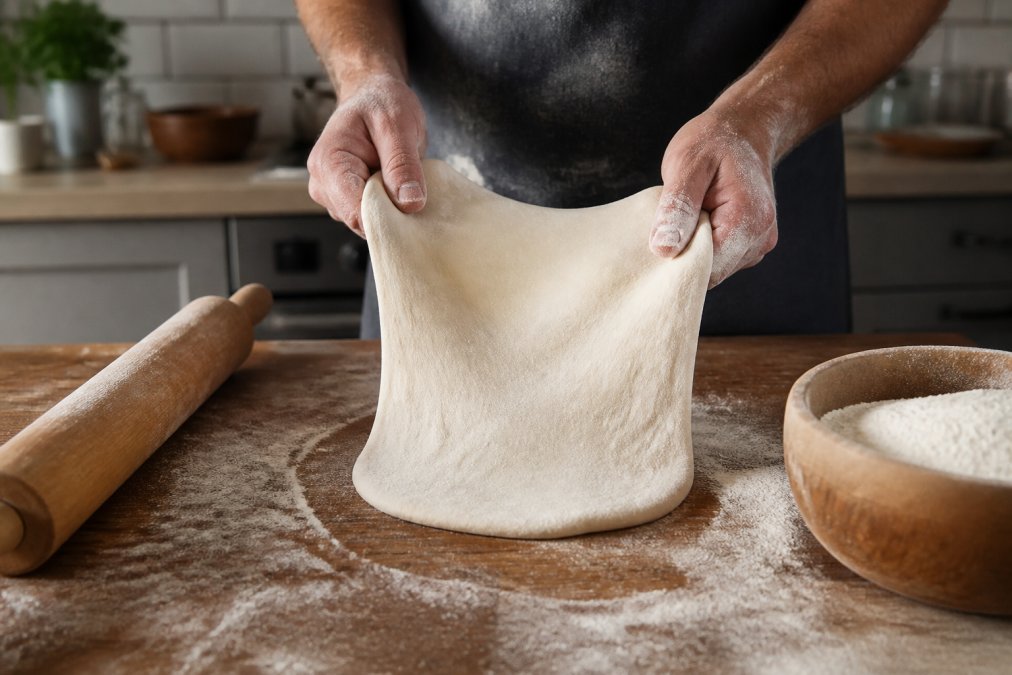
Flour protein content determines how much gluten can form, and gluten is what makes a thin crust spring back, puff, or turn tough. The two flours named most often are 00 flour and all-purpose (AP), and they behave very differently. Achieving that signature snap without the traditional protein structure requires careful consideration of gluten-free crust options for those who must avoid wheat entirely.
- 00 flour is finely milled and typically lands around 11-12.5% protein. It is the traditional choice for Neapolitan because the fine grind and moderate protein produce an extensible, tender dough that stretches without tearing. In a low-hydration cracker-style dough, however, 00 can feel slack and is easy to over-roll.
- All-purpose flour usually runs 10-12% protein depending on the brand, and it is the most forgiving choice for a home thin crust. It gives enough structure to roll thin without tearing but not so much that the base turns chewy.
- Bread flour runs 12-14% protein. It is the right call if you want a New York-style chew, and the wrong call if you want a St. Louis-style snap, because the extra gluten fights the crispness.
Hydration and Dough Handling
Hydration is the ratio of water to flour by weight, and the single biggest lever on thin crust texture. A low-hydration dough (roughly 55-60%) is stiff, easy to roll thin, and dries out in the oven instead of steaming. A higher-hydration dough (60%+) is more flavorful and easier to stretch by hand, but needs a hotter, faster bake to avoid a soggy center.
Equipment: Home Oven vs. Pizza Oven vs. Air Fryer
Most guides stop at "use a stone" and leave you guessing. The right method depends entirely on what you own.
Troubleshooting: Soggy Centers and Burnt Edges
The two failures home bakers search for most often are a soggy center and burnt edges with a raw middle. Both have specific causes.
| Problem | Likely Cause | Fix |
|---|---|---|
| Soggy center | Wet toppings, cold pan, high hydration | Par-bake crust, preheat surface, cut water |
| Chewy, tough base | Over-kneading, high-protein flour | Knead less, switch to AP flour |
| Burnt edges, raw middle | Top-heat dominant, cold surface | Lower rack, use stone or steel |
| Cracked, brittle dough | Too dry, over-rolled | Add water, roll gently, rest dough |
| No crunch | Low oven temp, short preheat | Preheat longer at max heat |
The Difference Between Thin Crust and Hand-Tossed
The difference between thin crust and hand-tossed comes down to thickness, texture, and shaping. Hand-tossed dough is stretched by hand and left thicker, producing a soft, airy, chewy crust with a puffy rim. Thin crust is rolled or pressed flat and baked crisp.
Best Thin Crust Pizza Toppings for Every Craving
The best thin crust pizza toppings are light, low-moisture, and applied sparingly. A thin base cannot carry the same load as a thick one, so watery toppings like fresh tomatoes or wet mozzarella will sink it.
- Classic: pepperoni, Italian sausage, mushrooms, green pepper
- Fresh: arugula added after baking, prosciutto, shaved parmesan
- Simple: a light layer of sauce, low-moisture mozzarella, basil
- Hearty: crumbled sausage, onion, roasted peppers
Troubleshooting Common Thin Crust Failures
Most thin crust failures trace back to too much moisture or too little heat. Here is how to fix the most common ones.
| Problem | Likely Cause | Fix |
|---|---|---|
| Soggy center | Wet toppings, cold pan | Pre-bake crust, preheat sheet |
| Chewy, tough base | Over-kneading, high hydration | Knead less, cut water |
| Burnt edges, raw middle | Oven too hot on top | Use a stone, lower rack |
| Cracked, brittle dough | Too dry, over-rolled | Add a little water, roll gently |
| No crunch | Low oven temp | Preheat longer at max heat |
Why Famous Pizza's Thin Crust Stands Out
Famous Pizza is a family-owned and operated business with over 20 years of experience serving Rhode Island and Massachusetts communities. We treat every customer like family and focus on building lasting connections, which is why consistency matters to us as much as flavor. Our rewards program gives regulars a way to save on the meals they already love, and our warm, welcoming approach is built for busy families who want a reliable weeknight dinner.
FDA guidance on food safety for food businesses
Frequently Asked Questions
What is the secret to achieving a perfectly crispy thin crust?
A hot oven and a preheated baking stone or steel make the biggest difference. Set your oven to 500-550°F and let it heat for at least 30 minutes. Roll the dough thin, use a light hand with sauce and toppings, and bake on the lowest rack. A brief par-bake before adding toppings also helps prevent sogginess. For consistent results without the guesswork, ordering from a pizzeria that specializes in thin crust is a reliable option.
How does authentic thin crust differ from standard hand-tossed pizza?
Authentic thin crust is rolled or pressed flat, producing a cracker-like, crispy base with a crunch you can hear. Hand-tossed dough is stretched by hand and left thicker, creating a chewy, airy texture with a soft interior. Thin crust also has a higher topping-to-crust ratio, so each bite delivers more flavor from the toppings. The difference between thin crust and hand-tossed comes down to texture and how the dough is handled before baking.
What ingredients are essential for an authentic thin crust?
For the sauce, a simple crushed tomato base seasoned with oregano and garlic works well. Fresh mozzarella or a low-moisture variety both work, but drain wet toppings well.
Is thin crust pizza considered healthier than thick crust?
Thin crust typically has fewer calories and carbohydrates per slice because there's less dough. However, toppings matter more than the crust itself. Loading a thin crust with extra cheese, processed meats, and heavy sauces can push the calorie count right back up. If you're watching portions, thin crust gives you a lighter base to build on.
Finding a thin crust that is consistently crispy, not soggy or burnt, is harder than it should be. Famous Pizza brings over 20 years of family-owned experience, a warm and welcoming dining environment, and a rewards program that saves regulars money on every order. Order online with Famous Pizza and get a thin crust your whole family will come back for.