 How-to
How Do You Spot Consistent Pizza Quality?
Last Updated: November 14, 2026
Quick Summary
Consistent pizza quality is the same set of eating experiences delivered every time: a crust that browns evenly, a firm center, balanced sauce and cheese, and toppings spread the same way slice to slice. Judge it with a fixed 1-to-5 scoring rubric applied the same way on each visit, because the pattern across visits matters more than any single score.
- A shop scoring a solid 8 out of 10 every visit is more predictable than one that swings between 10 and 5.
- Even rise across the pie, consistent crust thickness and a stable center are the first quality signals.
- Score each rubric category from 1 to 5 and compare totals across visits rather than judging one pie.
- Count toppings on two opposite slices and compare the sauce margin width on all sides.
- Scores that drop on weekend nights point to volume stress, when dough is stretched faster.
Table of Contents
- What Makes Pizza Quality Consistent, Order After Order
- Pizza Dough Consistency Before Rising: The First Quality Signal
- Signs of Good Pizza Crust: Appearance, Texture, and Structure
- Pizza Topping Distribution and Ingredient Balance
- How to Evaluate Pizza Quality With a Repeatable Scoring Rubric
- Operational Checks: Measuring Batch Variation Over Time
- Troubleshooting Inconsistent Results Across Styles and Ovens
- Ordering Your Next Pie With Confidence
- Frequently Asked Questions
What Makes Pizza Quality Consistent, Order After Order
Consistent pizza quality is the same set of eating experiences delivered every time: a crust that browns evenly, a center that stays firm, balanced sauce and cheese, and toppings spread the same way slice to slice. One great pie proves a shop can cook. Repeating it proves a kitchen has a system.
That gap is where most disappointment lives. A Friday night pie can be perfect and a Tuesday pie from the same oven can arrive pale and soggy. The difference is rarely talent. It is routine.
At Famous Pizza, we have run a family-owned kitchen for over 20 years, and the lesson is simple: what makes pizza quality reliable is not a secret recipe. It is checking the same things the same way, batch after batch.
Why One Great Pie Is Not Proof of Consistency
A single excellent pizza tells you the kitchen can hit its best. It says nothing about its worst.
Consistency is a range, not a peak. The question to ask is not "was this pie good?" but "was this pie the same as last time?" A shop that scores a solid 8 out of 10 every visit is more predictable than one that swings between 10 and 5.
Two visits, a week apart, tell you more than one perfect meal ever will.
Pizza Dough Consistency Before Rising: The First Quality Signal
Dough consistency before rising is the first quality signal because it decides how the crust behaves later. A dough that is mixed and portioned evenly rises evenly, browns evenly, and holds its shape. A dough that varies in hydration or ball size produces crusts that vary too.
You cannot see the dough from the counter, but you can see what it becomes. Watch for these clues:
- Even rise across the pie: one side puffing higher than the other points to uneven dough balls.
- Consistent crust thickness: wildly thick and thin spots on the same pie suggest uneven stretching.
- Stable center: a firm center under the sauce means the dough was strong enough to hold up.
Signs of Good Pizza Crust: Appearance, Texture, and Structure
The signs of good pizza crust are a golden, even brown across the border, visible air bubbles under the surface, and an underside that is crisp without being burnt. The crust should feel light in the hand, crisp at the edge, and tender where it meets the sauce.
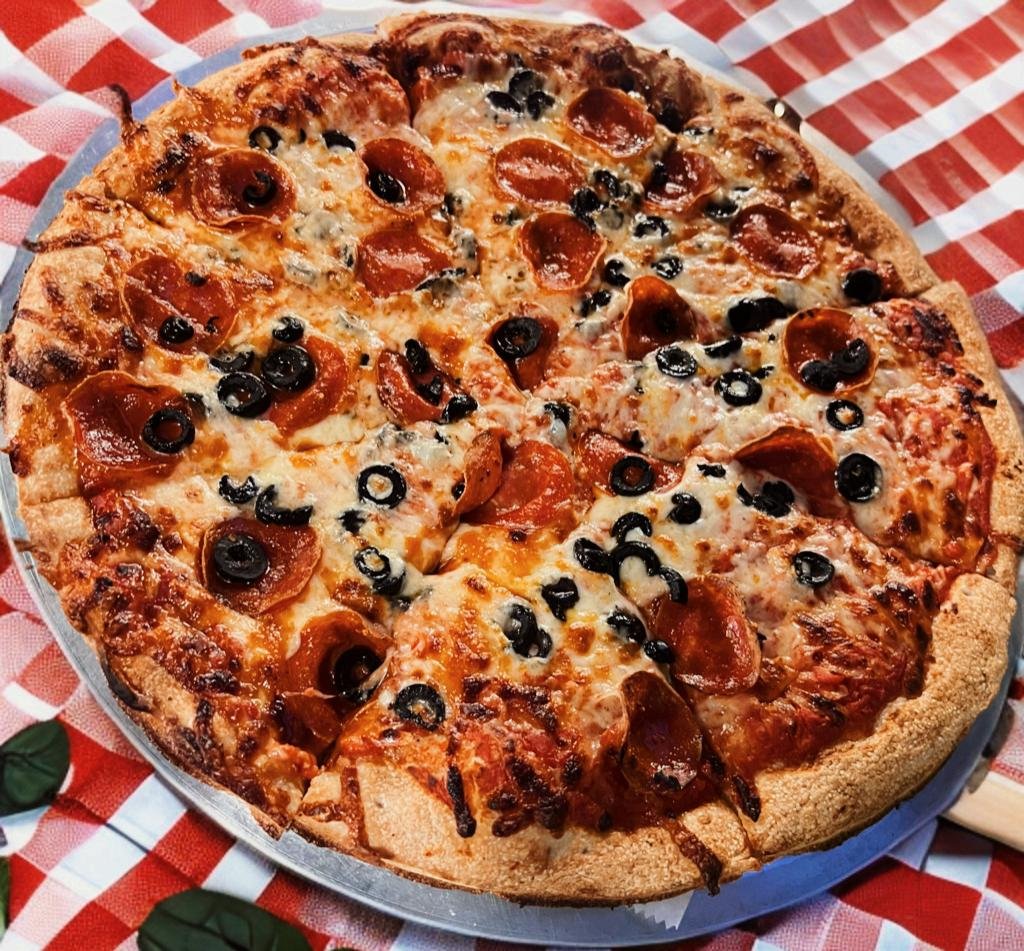
Crust is where consistency shows up first. The same recipe, stretched the same way and baked at the same temperature, produces the same crust. Miss one of those steps and the difference is visible.
Reading the Crust Border, Air Bubbles, and Underside
The crust border, often called the cornicione, is the rim that puffs without toppings. Good air bubbles in that border mean the dough fermented properly and had strength. A flat, dense rim means the dough was tired or under-proofed.
Flip a slice over. The underside should be dry, evenly browned, and firm. A pale, limp underside means the oven floor was not hot enough. A charred ring with a raw middle means the bake was too fast and too hot.
For a closer look at what a proper crust structure should feel like, our guide on what makes high quality pizza breaks down the markers in detail. And if your own home pies keep coming out limp in the middle, the fixes in avoiding soggy pizza crust address the most common cause.
Pizza Topping Distribution and Ingredient Balance
Pizza topping distribution is the even spread of sauce, cheese, and toppings across the pie so every slice carries a similar bite.
A practical way to judge balance is to compare slices against each other rather than judging the pie as a whole.
Look for these on your next order:
- Sauce coverage: a thin, even layer that stops short of the crust edge, with the same margin on every slice.
- Cheese melt: full melt with no bare patches and no grease pooling in the center; cheese should reach the sauce line, not pile up in the middle.
- Topping spread: toppings reaching near the edge, spaced evenly, with a similar count per slice rather than a cluster in the center.
- Portion sense: a loaded pie that sags under its own weight is a distribution problem, not generosity.
- Slice-to-slice parity: the first slice and the last slice should look like they came from the same pie.
Ingredient handling shows up here too. Fresh vegetables release water as they cook, so a kitchen that handles them well portions them carefully and may pre-drain or blanch items like mushrooms and spinach.
Watch out: a pie that looks balanced on top can still be unbalanced underneath.
For consistency, score distribution on a fixed scale rather than a gut feeling. Count toppings on two opposite slices and compare. Note whether the sauce margin is the same width on all sides.
How to Evaluate Pizza Quality With a Repeatable Scoring Rubric
The most reliable way to evaluate pizza quality is a fixed scoring rubric you apply the same way every time. Score each category from 1 to 5, add the totals, and compare the number across visits. The score matters less than the pattern.
| Category | What to Check | Score (1-5) |
|---|---|---|
| Crust appearance | Even browning, puffed border, visible air bubbles | |
| Crust texture | Crisp edge, tender interior, no soggy center | |
| Dough freshness | Light chew, no dense or gummy patches | |
| Sauce balance | Even layer, bright flavor, not watery | |
| Cheese melt | Full melt, no grease pool, even coverage | |
| Topping spread | Even distribution, sensible portions | |
| Doneness | Firm underside, no pale or burnt spots | |
| Aroma and flavor | Fresh smell, balanced seasoning |
Score the same pie type each time so you compare like with like. A 30 out of 40 on three straight visits is a stronger signal than a single 38. Our team uses a version of this checklist in our own kitchen, and the deeper method is covered in ensuring consistent pizza quality for anyone who wants to run it at home.
Operational Checks: Measuring Batch Variation Over Time
Batch variation is the difference between one pie and the next from the same kitchen. Measuring it means tracking the same few checks over several orders and watching for drift.
Start with a fixed set of measures you can record in under a minute per order. The goal is not precision laboratory data. It is a repeatable record you can compare week to week.
- Bake color: describe the crust border on a simple scale, such as pale, golden, or dark, and note whether the color is even around the rim.
- Underside doneness: note whether the underside is dry and firm, pale and limp, or charred in spots.
- Center firmness: lift a slice and record whether the center holds or sags.
- Topping parity: count toppings on two opposite slices and note whether the counts match.
- Arrival condition: note whether the pie was eaten in the dining room, picked up, or delivered, because time in the box changes texture.
Keep a simple log with the date, the pie you ordered, the time of day, and your rubric score. After four or five entries, patterns appear:
- Scores that drop on weekend nights point to volume stress, when dough is stretched faster and ovens run back-to-back.
- Scores that drop on delivery orders point to time in the box, where steam softens the crust.
- Scores that swing between visits point to dough handling, especially uneven ball sizes or inconsistent proofing time.
- Scores that drop only on certain pie types point to topping load rather than the oven or dough.
A common mistake is judging a kitchen on one bad night. One low score is noise. Three in a row is a trend, and a trend is worth a conversation with the shop.
Watch out: changing more than one variable at a time makes the log useless.
Troubleshooting Inconsistent Results Across Styles and Ovens
Inconsistent results usually trace to one of four causes: dough that was not ready, an oven running at the wrong temperature, uneven topping portions, or a pie that sat too long before serving. Each cause leaves a different signature on the pie.
- Soggy center, pale underside: oven floor too cool, or too much sauce and wet topping.
- Burnt edge, raw middle: oven too hot and bake too fast.
- Dense, bready crust: dough under-proofed or overworked.
- Greasy, heavy pie: cheese over-portioned or toppings piled too high.
Style changes the target too. A thin-crust pie is judged on snap and lightness, while a thicker pie is judged on an even bake through the middle. For a full breakdown of how style shapes expected crust results, see our authentic thin crust guide.
Ordering Your Next Pie With Confidence
You now have the checks. Use them on your next order and you will know within two bites whether the kitchen is holding its standard.
At Famous Pizza, consistency is the whole point of how we run our kitchen. We are family-owned, have over 20 years of experience, and treat every customer like family.
If you want to put these checks to work, browse the full menu and order a pie. Then score it. We would rather earn a repeat visit than a single good night.
Great pizza should not be a gamble. Famous Pizza brings over 20 years of family-run experience to every pie, with a warm welcome in the dining room, a rewards program that rewards regulars, and a menu made for busy weeknights and casual get-togethers.
Frequently Asked Questions
How can you tell whether a pizzeria's quality is consistent over time?
Order the same pizza on at least three separate visits and score it against the same criteria each time: crust color and crispness, dough texture, topping coverage, and doneness at the center. Consistent pizza quality shows up as a narrow spread between visits, not one standout pie. Note bake time and how the pizza travels if you order delivery, since a soggy center on arrival points to packaging or timing problems rather than the recipe itself.
What should a consistently good pizza crust look and taste like?
A good crust has an even golden-brown border with some air bubbles, a dry, crisp underside, and a tender crumb that chews without being doughy. The signs of good pizza crust include a clean snap at the edge, no raw floury taste, and no pale, floppy center. If the crust is burnt on one side and pale on the other, the oven heat is uneven. If it is soggy in the middle, the sauce or toppings were overloaded or the bake was too short.
What is the 3/8 rule for pizza?
The 3/8 rule is a portioning guideline: roughly 3 ounces of cheese and 8 ounces of dough for a personal or small pizza, scaled up for larger sizes. It gives a repeatable starting point so sauce, cheese, and dough stay in balance batch after batch. Exact weights vary by style and oven, so treat it as a baseline and adjust based on how the finished pie browns and holds its structure.
How do you evaluate the balance of sauce, cheese, and toppings?
Check pizza topping distribution first: toppings should reach close to the edge without piling in the center, and no single ingredient should dominate. Sauce should be visible but not pooling, cheese should melt evenly without greasy pools, and the crust should stay crisp under the load. A balanced pie tastes layered rather than salty or heavy, and the center slice should hold its shape when you lift it.