 How-to
7 Ways to Avoid Soggy Pizza Crust at Home
Last Updated: November 7, 2026
Quick Summary
Avoid a soggy pizza crust by fully preheating your oven and baking surface before the pizza goes in, and by keeping added moisture low. Water is the enemy and heat is the tool, so drain wet toppings and use low-moisture mozzarella. Trust the underside, not the browned cheese top, to judge doneness.
- Preheat the pan, stone, or steel along with the oven so the bottom does not steam.
- Put a cold stone or steel in before turning the oven on so it does not crack.
- Electric ovens need extra preheat time and the lowest rack for bottom browning.
- Fresh mozzarella is high in moisture; low-moisture mozzarella is the safer home pick.
- Return a soggy pie to the hot surface for 2 to 3 minutes to re-crisp the bottom.
Table of Contents
- Why Soggy Pizza Crust Happens (and the Fix That Matters Most)
- How to Avoid Soggy Pizza Crust in the Oven
- Dough Hydration, Fermentation, and Even Thickness
- How to Make Sure Pizza Dough Is Cooked
- Manage Wet Toppings and Choose the Right Cheese
- How to Fix Soggy Pizza Bottom After Baking
- How to Keep Pizza From Getting Soggy in a Lunch Box
- Ordering a Crisp Crust Instead of Baking One
- Frequently Asked Questions
Why Soggy Pizza Crust Happens (and the Fix That Matters Most)
A soggy pizza crust almost always comes down to one thing: too much water left on the pie when it hits the oven.
Here is the good news. Most home bakers blame their dough when the real problem is a wet topping or a cold pan. Fix the moisture and the bake, and the crust turns crisp on its own.
The moisture problem in plain terms
A pizza crust is a thin sheet of dough with water baked into it.
Sauce, cheese, and vegetables add their own water on top. Fresh mozzarella and watery vegetables release a lot of it.
The fix that matters most: get the baking surface fully hot before the pizza goes in, and keep added moisture low.
If you want reliable results every time, our guide on how to ensure consistent pizza quality every time goes deeper into repeatable bakes.
A repeatable doneness test
Stop guessing. Use the same test every bake:
- Lift a corner with a spatula. The bottom should be dry and lightly browned, not pale or shiny.
- Tap the center with a finger. A cooked crust sounds hollow and feels firm.
- Check the underside, not the top. A browned cheese top can hide a raw, soggy middle.
If any of these fail, give the pie another minute or two directly on the hot surface.
How to Avoid Soggy Pizza Crust in the Oven
Learning how to avoid soggy pizza crust in the oven comes down to heat and surface. A hot oven and a fully preheated baking surface cook the bottom fast. That drives moisture out before it can soak in. Skip the preheat and you lose the battle before the pizza goes in.
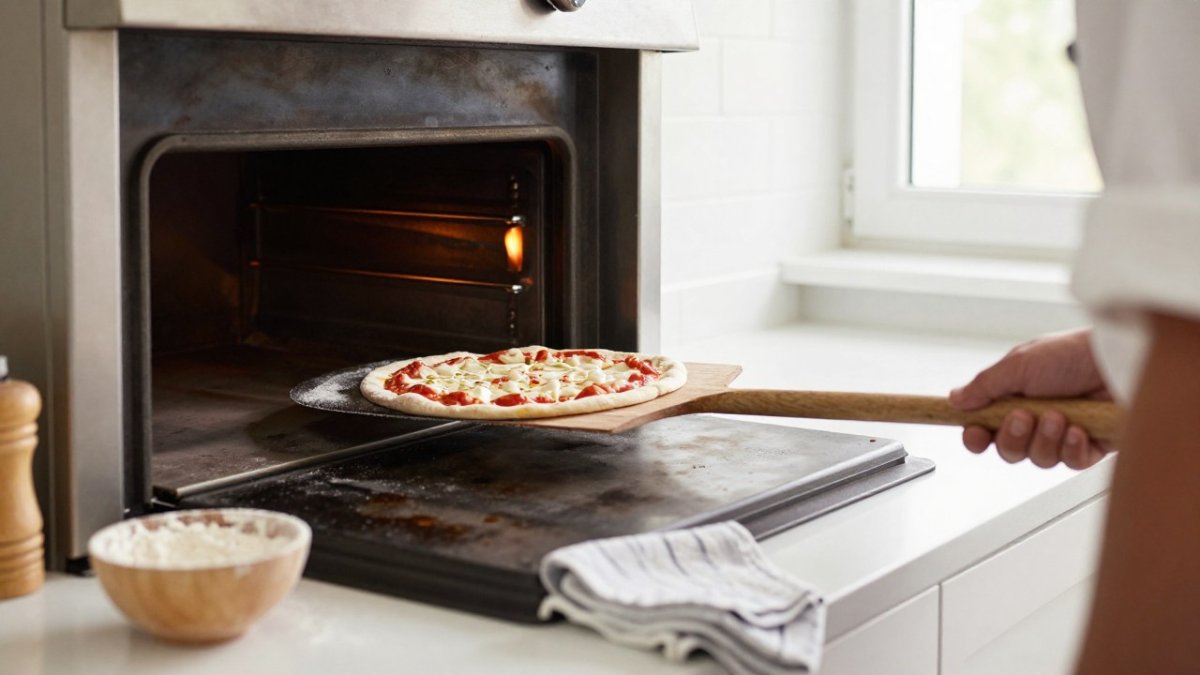
Preheat the oven and the baking surface fully
Set your oven as high as it will safely go, then wait.
A common mistake is to preheat the oven and then slide the pizza onto a cold pan. The pan steals heat from the dough. The bottom steams.
Watch out: placing a cold stone or steel into a fully heated oven can crack it. Put the stone or steel in before you turn the oven on and let them heat together.
Oven-specific settings for gas, electric, and convection
Every oven type behaves a little differently. Match your settings to yours:
| Oven Type | Best Setting | Rack or Stone Placement | Watch Out For |
|---|---|---|---|
| Gas | Highest bake, no fan | Stone or steel on the middle rack; rotate halfway | Hot spots near the flame |
| Electric | Highest bake, bottom heat | Stone or steel on the lowest rack for bottom browning | Slow preheat, uneven coils |
| Convection | Bake with fan, slightly lower temp | Middle rack; reduce time by a minute or two | Fan dries toppings fast |
| Countertop | Highest bake setting | Preheated stone or steel on the lower slot | Small cavity overheats fast |
For gas ovens, rotate the pie halfway through so one side does not burn. For electric, give the oven extra preheat time and use the lowest rack so the bottom gets direct heat. For convection, drop the temperature a bit, since moving air browns faster. A pizza stone or steel helps all three by holding steady heat under the crust.
Why bottom heat matters more than top heat
A soggy center is usually a bottom-heat problem. The top of the pizza browns from radiant heat, but the underside needs direct contact with a hot surface to drive out moisture.
If you do not own a stone or steel, preheat a heavy-duty sheet pan upside down and slide the pizza onto it. It is not as effective, but it beats a cold pan.
Dough Hydration, Fermentation, and Even Thickness
Dough that is too wet will always fight you. Dough hydration is the ratio of water to flour.
Fermentation matters too. Cold dough straight from the fridge, though, will resist browning. Let it come to room temperature before you stretch it.
Even thickness is the last piece. Roll or stretch the dough so the center is not thicker than the edges.
How to Make Sure Pizza Dough Is Cooked
To make sure pizza dough is cooked, bake on a hot surface until the underside is dry, browned, and firm to the touch. The top can look done while the middle stays raw.
A few habits help:
- Do not overload the pie. Too much sauce, cheese, or toppings weigh down the dough and slow cooking.
- Bake on the lowest rack so the bottom gets the most direct heat.
- Finish on the hot surface. If the top browns first, move the pie down to the stone or steel to crisp the base.
If the center still feels soft after baking, return it to the hot surface for another minute. That extra contact does more than another five minutes of top heat.
Manage Wet Toppings and Choose the Right Cheese
Wet toppings are the quiet cause of most soggy middles. The fix is simple: drain, dry, and pre-cook anything that holds water. A little prep before baking saves the whole pie.
- Drain and pat dry fresh tomatoes, olives, and jarred peppers.
- Pre-cook vegetables like mushrooms, onions, and zucchini to release their water first.
- Keep topping quantity modest. A crowded pie steams under its own weight.
Cheese choice matters just as much. Fresh mozzarella holds a lot of water. Low-moisture mozzarella melts and browns without soaking the crust. For home baking, low-moisture is the safer pick.
Ingredient moisture comparisons
Some toppings bring far more water than others. Plan around the wet ones:
| Ingredient | Moisture Level | Prep Tip |
|---|---|---|
| Fresh mozzarella | High | Slice and drain on paper towels |
| Fresh tomatoes | High | Seed, slice, and pat dry |
| Mushrooms | High | Sauté first to release water |
| Low-moisture mozzarella | Low | Shred and use directly |
| Hard cheese like Parmesan | Low | Grate finely as a base layer |
If you want to understand what separates a great pie from an average one, our guide on what makes high quality pizza breaks down the ingredient choices that matter.
How to Fix Soggy Pizza Bottom After Baking
Already pulled a soggy pie from the oven? You can still rescue it. The goal is to drive out trapped moisture before the crust sets soft. The fix depends on whether the crust is underbaked or steam-softened.
Tell underbaked from steam-softened
An underbaked bottom is pale, shiny, and flexible. A steam-softened bottom was crisp when it came out but went limp after resting on a plate or in a box. The first needs more heat.
Try these fixes in order:
- Return it to the hot surface. Slide the pie back onto the stone, steel, or a dry pan for 2 to 3 minutes. The direct heat crisps the bottom.
- Move it to a lower rack. More bottom heat, less top heat.
- Blot the top. A paper towel lifts surface moisture so it stops soaking down.
Watch out: never stack a hot, fresh pizza on a plate or in a closed box right away. Trapped steam softens the crust fast. Let it rest on a rack so air can reach the bottom.
Reheating leftovers without re-sogging
A microwave steams leftovers and makes the crust limp. Use dry heat instead:
- Skillet method: Warm a dry skillet over medium heat, add a slice, cover for 1 to 2 minutes, then uncover for 30 seconds to crisp the bottom.
- Toaster oven: Set to 350°F and place the slice directly on the rack or a preheated pan for 3 to 5 minutes.
- Oven method: Preheat to 375°F with a sheet pan inside, then slide the slice onto the hot pan for 4 to 6 minutes.
A common pattern is to reheat at too low a temperature for too long, which dries the toppings before the bottom crisps. Higher heat for a shorter time works better.
If the pizza is already cold and the center feels wet, blot both sides with paper towels before reheating. That removes surface moisture so the heat can crisp rather than steam.
How to Keep Pizza From Getting Soggy in a Lunch Box
Packing pizza for later takes a little planning. Steam is the enemy again. If you seal a warm slice in a container, the moisture has nowhere to go and soaks right back in.
Here is how to keep pizza from getting soggy in a lunch box:
- Cool completely first. Let slices rest on a rack until they reach room temperature before packing.
- Separate the layers. Place a paper towel between slices to absorb moisture.
- Keep the lid loose until the pizza is fully cool, then seal.
If packing feels like too much work, fresh delivery is the easier path. Our pizza delivery ordering guide covers how to get a hot pie to your door.
Ordering a Crisp Crust Instead of Baking One
Some nights, the best way to avoid a soggy crust is to let someone else do the baking. Ordering a hot, fresh pie can save you the work of managing these home-oven steps.
At Famous Pizza, we are family-owned and have spent over 20 years baking pies the way our community likes them. When you would rather order than bake, you can browse our menu to find your favorite. If thin, crispy crust is your goal, our guide on authentic thin crust pizza explains the style that stays crisp instead of soggy.
A few reasons ordering solves the soggy problem:
- Hot, even ovens. - Rewards that add up. Our loyalty program helps regulars save on repeat orders.
Avoiding a soggy crust at home is a matter of heat, moisture, and patience. When you would rather skip the guesswork, Famous Pizza is here with fresh, flavorful pies, a warm welcome, and a rewards program that treats you like family.
Frequently Asked Questions
How do I keep my pizza crust from getting soggy?
Cut moisture at every stage. Preheat the oven and your stone or steel for at least 30 minutes at the highest temperature it handles, stretch the dough to an even thickness, and keep sauce and cheese to a thin layer. Pat fresh mozzarella dry and pre-cook watery vegetables like mushrooms and zucchini. A fully preheated baking surface drives heat into the base fast, so the bottom sets and crisps before the toppings release their water.
Should you preheat a pizza stone or steel to prevent soggy crust?
Yes. A cold or barely warm stone pulls heat out of the dough instead of pushing heat in, and the base stays pale and soft. Put the stone or steel on a rack in the upper-middle position and let it heat for 30 to 60 minutes at your oven's top temperature. If you add a pizza to a stone that has only heated for 10 minutes, expect a soggy middle no matter how good the dough is.
How do you fix a soggy pizza bottom after it is already baked?
Return the slice or the whole pizza to a dry skillet over medium heat for 2 to 3 minutes to crisp the base, or slide it back onto a hot stone under the broiler for 1 to 2 minutes. Blot any pooled moisture with a paper towel first. For next time, note which topping released the water and pre-cook or drain it, and check that your oven and baking surface were fully preheated.
How can you keep pizza from getting soggy in a lunch box?
Cool the pizza completely on a wire rack before packing it, since trapped steam is what softens the crust. Wrap slices in foil or parchment, or place them in a hard container with a paper towel under the base to absorb condensation. Keep the container out of the fridge if the pizza will be eaten within a few hours, and reheat slices in a skillet or toaster oven rather than a microwave to bring back the crisp.