 How-to
7 Steps to Find Authentic Local Grinders
Last Updated: November 8, 2026
Quick Summary
To find authentic local grinders, run a fixed 30-minute search in order: map first, reviews second, phone call third, visit last. Search the specific term rather than a vague one, then filter by recent review dates, owner replies, real kitchen photos, and a phone number that reaches a person.
- A burr coffee grinder crushes beans evenly, while a blade grinder chops unevenly and leaves fines.
- Conical burrs suit most home brewers, and flat burrs appeal to espresso purists chasing a flavor profile.
- Check burr material, axle wobble, adjustability, and weight when handling a manual grinder in person.
- Original cast burrs are cut, not stamped, so a fingernail catches cleanly on a genuine tooth.
- Pay in person when possible and get return terms in writing before money changes hands.
Table of Contents
- What 'Local Grinders' Actually Means Before You Search
- A Practical Local Search Workflow for Grinder Shops
- Choosing a Burr Coffee Grinder That Fits Your Brew Method
- Best Manual Coffee Grinders for Testing in Person
- Best Grinder for Traditional Espresso: What to Verify Locally
- Authenticity Checks for Vintage and Secondhand Grinders
- Seller and Listing Verification Before You Pay
- Book a Grinder Demo at Famous Pizza
- Frequently Asked Questions
What 'Local Grinders' Actually Means Before You Search
The phrase "how to find authentic local grinders" hides a fork in the road, and picking the wrong path wastes an afternoon.
This guide covers both meanings, because the same skill applies to each: knowing how to tell a genuine local operation from a lookalike.
For the sandwich side, start with our breakdown of what defines authentic pizza grinders. It explains the roll, the fillings, and the details that signal real craft.
A Practical Local Search Workflow for Grinder Shops
A good local search takes about 30 minutes and follows a fixed order: map first, reviews second, phone call third, visit last. Skipping steps is how people end up at a tourist trap.
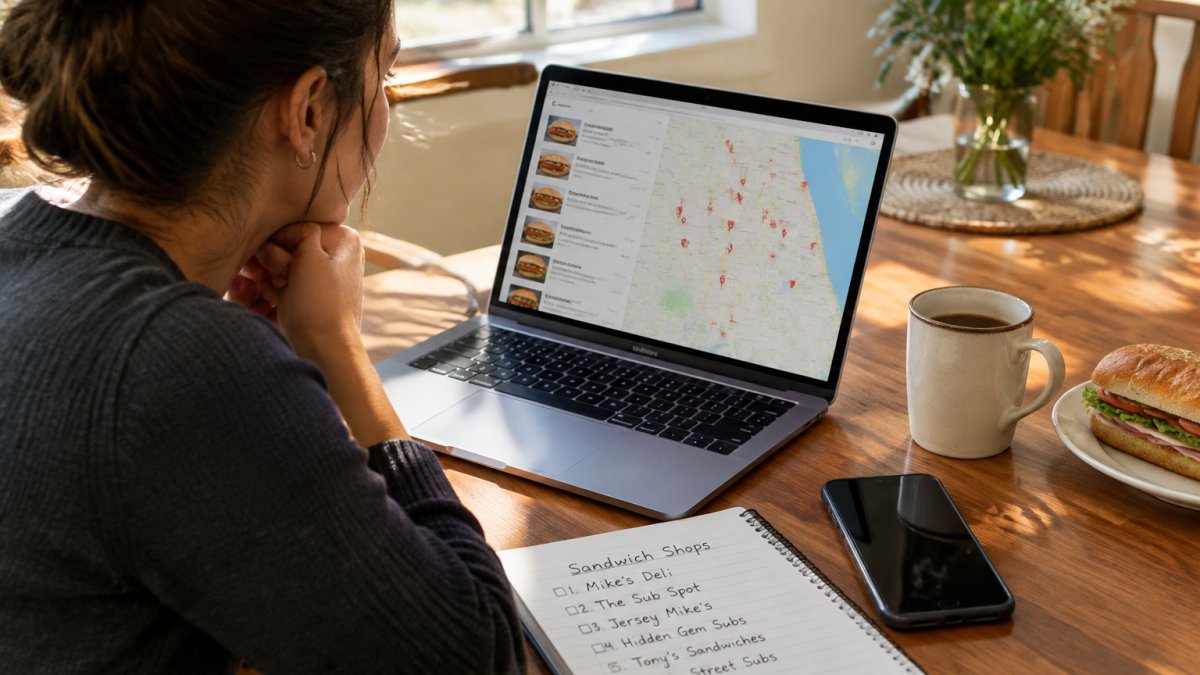
Mapping Shops, Roasters, and Repair Counters
Search the map for the specific term, not a vague one. "Grinder shop" and "Italian sub" return different results than "sandwich near me," and coffee searches need "coffee roaster" or "espresso machine repair" to surface the right places.
Then filter by what the map cannot tell you:
- Photos of the actual kitchen or roastery, not stock images
- Review dates within the last few months
- Replies from the owner to critical reviews
- A phone number that reaches a person
For a wider method, see our guide to finding alternatives to tourist trap restaurants, which walks through the same filters in more depth.
Choosing a Burr Coffee Grinder That Fits Your Brew Method
Match the grinder to the brew method before anything else. A burr coffee grinder crushes beans between two abrasive surfaces, which produces even particles; a blade grinder chops unevenly and leaves fines that clog a pour-over.
| Brew Method | Grind Size | Grinder Type | Priority Feature |
|---|---|---|---|
| Espresso | Fine | Conical burr, stepless | Micro-adjustability |
| Pour-over | Medium | Conical or flat burr | Consistency |
| Drip machine | Medium | Conical burr | Hopper capacity |
| Cold brew | Coarse | Any burr grinder | Grinding speed |
| French press | Coarse | Conical burr | Low retention |
Grind consistency is the whole game. Uneven particle size means uneven extraction, so some of the cup tastes bitter and some tastes sour at once.
Best Manual Coffee Grinders for Testing in Person
Manual grinders are the smartest way to test a shop's seriousness, because the staff usually own one and will talk about it. A hand grinder also lets you feel burr alignment and build quality before you commit.
When you handle one at a counter or a market stall, check these:
- Burr material: hardened steel holds an edge far longer than ceramic
- Axle wobble: grip the handle and rock it; any play means inconsistent grind
- Adjustability: stepless collars allow fine espresso tuning, stepped ones suit drip
- Weight and grip: a heavy base stays steady on the counter
Ask the seller whether replacement burrs can be ordered, and whether they will show you the grind at two settings.
Best Grinder for Traditional Espresso: What to Verify Locally
The best grinder for traditional espresso is a stepless burr model with fine adjustment, and verifying one locally means testing the machine, not reading the box. Espresso needs a grind fine enough to build pressure, and small adjustments change the shot dramatically.
Ask the shop to pull a shot with a grind you choose. Watch for clumping in the basket, listen for a steady pump tone, and check whether the dose is weighed rather than scooped.
Authenticity Checks for Vintage and Secondhand Grinders
Vintage grinders attract reproductions, and the fakes usually fail on small details that a careful buyer can learn to read in a single inspection. The goal is not to become a collector; it is to tell a genuine older grinder from a modern lookalike and from a heavily restored unit being sold as original.
Start With the Burrs, Not the Body
The burr set is the hardest part to fake convincingly. Original cast burrs on older hand grinders have a distinctive tooth pattern, cut, not stamped, with sharp edges and consistent spacing. Reproduction burrs often look pressed or stamped, with rounded teeth and visible parting lines.
Watch out: a seller who will not let you remove the burr or shine a light into the grinding chamber is hiding something, because the burr is the first thing a knowledgeable buyer checks.
Read the Maker's Marks Like a Document
Maker's marks are where reproductions most often slip. Look for crisp lettering, correct spelling, and a mark consistent with known examples of that maker. Compare the mark's placement and depth to photos from collector forums and museum collections; a mark that is too shallow, too centered, or set in a slightly wrong typeface is a warning. Country-of-origin stamps, patent dates, and model numbers should line up with the claimed era, a grinder stamped with a patent date that postdates the seller's stated year is a reproduction or a misrepresentation.
Separate Restoration From Reproduction
Restoration is not fraud; misrepresenting it is. A repainted body, a replaced handle, or a new adjustment knob can all be legitimate if disclosed. Ask directly: what has been replaced, what has been repainted, and what is original? A seller with a real restoration story will answer in specifics.
A common pattern among experienced buyers is to value provenance over polish.
Check Serviceability Before You Fall in Love
A vintage grinder is only worth owning if it can be kept running. Before paying, confirm three things: whether replacement burrs are still manufactured or available from parts dealers, whether the axle and bearings can be replaced, and whether a local repair shop will touch it. Most practitioners find that common hand-grinder patterns have parts available for decades, while obscure or decorative models often do not. If the burrs are proprietary and no longer made, the grinder is a display piece, not a tool.
The Inspection Checklist
Run through this before money changes hands:
- Burr teeth are sharp and evenly cut, not rounded or stamped
- The axle turns smoothly with no grinding or wobble
- Threads on the adjustment collar are clean and engage fully
- Maker's marks are crisp, correctly spelled, and consistent with known examples
- Patent dates and model numbers match the claimed era
- Paint and finish show age consistent with the claimed date, or restoration is disclosed
- Replacement burrs and parts are available
- The seller can explain where the grinder came from
Provenance matters more than polish, and serviceability matters more than either. A grinder you can maintain locally will outlast a prettier one you cannot.
Seller and Listing Verification Before You Pay
Secondhand listings need the same skepticism as vintage finds, but the bigger gap is upstream: most buyers never learn how to find local sellers in the first place. A practical local search runs through four channels, retailers, repair shops, community groups, and secondhand listings, and each channel has its own verification routine.
Run the Local Search in the Right Order
Start with map searches using the specific term, not a vague one.
Community groups come next. Local hobbyist forums, neighborhood message boards, and social-media buy-and-sell groups surface sellers who never list publicly.
Secondhand listings come last, because they carry the most risk and the most noise. Filter by distance, sort by recency, and skip any listing that uses stock photos or refuses local pickup.
Ask the Questions That Reveal a Real Seller
A short video of the grinder running with beans tells you more than a dozen photos, because it shows wobble, noise, and speed. Ask for it before you agree to meet. Then ask:
- Has the burr set ever been replaced, and with what?
- Has the machine been aligned or serviced, and by whom?
- Why are you selling it?
- Is the serial or model number visible in the photos?
- Will you accept a local pickup so I can inspect it in person?
A seller who answers in specifics is usually legitimate. A seller who deflects, rushes, or refuses local pickup is a warning sign, not a negotiation tactic.
Verify the Listing Against the Item
When you meet, confirm that the serial or model number on the machine matches the photos and the listing. Check that the seller's name matches the payment account before any money moves.
Watch out: paying a deposit through a peer-to-peer app to a name that does not match the seller's profile is the single most common way buyers lose money on local listings.
Assess Local Serviceability Before You Buy
A grinder is only local if it can be serviced locally. Before paying, call the nearest repair shop and ask two questions: do you service this model, and what is the typical turnaround and cost for a burr replacement or alignment? If the answer is no, or if parts must be shipped from overseas, factor that into the price. A used grinder that needs a $150 service is not a bargain at $200.
Payment and Return Terms
Pay in person when possible, and use a payment method with buyer protection when you cannot. Get return terms in writing before money changes hands, even a text message counts. A seller who will not put return terms in writing is telling you what the after-sale experience will be.
Our guide to finding the best local pizza covers how to vet a food business the same way: call, verify, visit, and only then commit.
Book a Grinder Demo at Famous Pizza
At Famous Pizza, we are family-owned and have over 20 years of experience, and we treat every customer like family. Come see the menu before you visit, and read our about us page to meet the family behind the counter.
Finding an authentic local grinder, sandwich or coffee, comes down to verifying details instead of trusting a listing. Famous Pizza is family-owned, has served our communities for over 20 years, and offers a rewards program for customers who keep coming back.
Frequently Asked Questions
What should I look for when buying a coffee grinder locally?
Prioritize a shop that lets you handle the grinder and run a test grind. Check for burr type (conical or flat), grind size adjustability, and whether replacement burrs are available. Ask about service and repair options nearby. A local grinder purchase is strongest when the seller can demonstrate grind consistency and explain how to clean and maintain the machine.
How can I tell whether a coffee grinder is authentic and in good condition?
Request the serial number and match it to the manufacturer's records. Inspect burrs for chips or wear, spin the burr by hand to feel for wobble, and check for rust or cracked plastic. Ask for a live video or in-person test grind. Authentic local grinders usually come with original packaging, manuals, and a seller willing to answer provenance questions.
What is the difference between a burr grinder and a blade grinder?
A burr coffee grinder crushes beans between two abrasive surfaces for even particle size, which improves extraction and flavor. A blade grinder chops beans with spinning metal, producing uneven grounds that brew inconsistently. For espresso, pour-over, or cold brew, a burr grinder is the better choice. Blade grinders are cheaper but rarely deliver the consistency serious brewing requires.
Where can I try a coffee grinder before buying it?
Local coffee equipment shops, specialty roasters, and repair counters often have demo units. Call ahead and ask whether you can bring your own beans and brew method. Testing in person lets you feel the grind adjustment, listen to the motor, and check retention. If a shop will not let you test, that is a signal to keep looking for a more transparent local seller.