 blog
How to Decide If Gluten-Free Pizza Crust Is Worth It for Parties
Last Updated: November 5, 2026
Quick Summary
Gluten-free pizza crust is worth it for parties when at least one guest must avoid gluten, because it costs more and yields fewer slices. Most gluten-free crusts use rice flour, tapioca starch, potato starch, or almond flour. Keep it separate from regular pizza to prevent cross-contact.
- Gluten-free pizza usually costs more per pizza and may yield fewer slices.
- Order one gluten-free pizza for every two to three guests who need it.
- Use a separate cutter, board, and tray for gluten-free slices.
- Ask the pizzeria whether the crust is prepared in a separate area.
- Serve gluten-free slices first, before regular pizza crumbs spread.
Table of Contents
- What Gluten-Free Pizza Crust Is Made Of and Why It Matters for a Party
- Does Gluten-Free Pizza Taste Different From Regular Pizza?
- Gluten-Free Pizza vs. Regular Pizza: Taste, Texture, and Nutrition Compared
- How Much Pizza to Order for a Party With Mixed Diets
- Preventing Gluten-Free Pizza Cross-Contamination at Your Party
- Cost, Serving Quality, and Logistics: Is It Worth the Extra Money?
- Planning a Party Menu Everyone Can Eat From
- Frequently Asked Questions
What Gluten-Free Pizza Crust Is Made Of and Why It Matters for a Party
Gluten-free pizza crust can be worth it for parties when at least one guest must avoid gluten, but the trade-offs depend on your group. Most gluten-free crusts swap wheat flour for blends of rice flour, tapioca starch, potato starch, or almond flour. Gluten is the protein in wheat, barley, and rye that gives traditional dough its stretch and chew.
Why does this matter for a party? Because the ingredients shape how the crust bakes, tastes, and holds toppings. A crust built on rice flour cooks differently than one built on almond flour, and that affects how many slices each pizza yields.
Ingredient differences to check before you order:
- Rice flour blends: Light, neutral, and the most common base.
- Almond flour crusts: Richer and nuttier, but they brown quickly.
- Cauliflower crusts: Often thinner and more fragile.
- Shared-kitchen bases: Check whether the crust comes from a dedicated gluten-free line.
It is a good idea to ask your pizzeria which crust they use and how it is prepared before you commit.
Does Gluten-Free Pizza Taste Different From Regular Pizza?
Yes, gluten-free pizza usually tastes different from regular pizza, though the gap has narrowed. Traditional crust has a savory, slightly yeasty flavor from wheat fermentation. Gluten-free crust tends to taste milder, sometimes a little sweet or nutty depending on the flour.
Texture is where most people notice the difference:
- Regular crust is chewy and elastic.
- Gluten-free crust is often softer, denser, or more crumbly.
- Thin gluten-free crusts can crisp well but may tear when you lift a slice.
Toppings and sauce do a lot of the flavor work on gluten-free pizza. A bold tomato sauce, a good cheese blend, and a little fresh basil can make the crust taste like a complete pizza rather than a substitute.
Gluten-Free Pizza vs. Regular Pizza: Taste, Texture, and Nutrition Compared
Here is a side-by-side look at how the two options compare for a party setting.
| Factor | Regular Pizza | Gluten-Free Pizza |
|---|---|---|
| Flavor | Savory, yeasty | Milder, sometimes nutty |
| Texture | Chewy, elastic | Softer, can be crumbly |
| Carbohydrates | Higher | Often similar or slightly lower, depending on the flour |
| Calories | Varies by size and toppings | Varies; some blends are higher in fat |
| Party cost | Usually lower per slice | Usually higher per pizza |
| Best for | Mixed groups with no restrictions | Groups with celiac disease or gluten sensitivity |
Pros of gluten-free pizza for parties:
- Makes everyone at the table feel included.
- Crust options like almond or cauliflower suit other dietary preferences.
- Good toppings can make it taste satisfying.
Cons of gluten-free pizza for parties:
- Costs more per pizza.
- Crust may be smaller or harder to slice.
- Texture can disappoint guests who expect a classic chew.
Nutrition varies widely between crusts and recipes, so check the specific product rather than assuming gluten-free means lower in calories.
How Much Pizza to Order for a Party With Mixed Diets
Plan for fewer slices per pizza when you mix gluten-free options in. Gluten-free crusts are often smaller, so a standard 14-inch pie may yield fewer slices than you expect. Build your order around the people who need gluten-free food, not the total headcount alone.
A simple way to plan:
- Estimate 3 slices per adult if you have a general crowd.
- Order one gluten-free pizza for every two to three guests who need it.
- Add one extra regular pizza if your group eats heavily.
Pricing depends on size, quantity, and delivery, so check Famous Pizza's website for current prices or ask for a quote when you order.
For a more detailed breakdown, see how much pizza to order for 20 people.
Preventing Gluten-Free Pizza Cross-Contamination at Your Party
Cross-contact is the biggest risk for guests with celiac disease, and a party is one of the easiest places for it to happen.
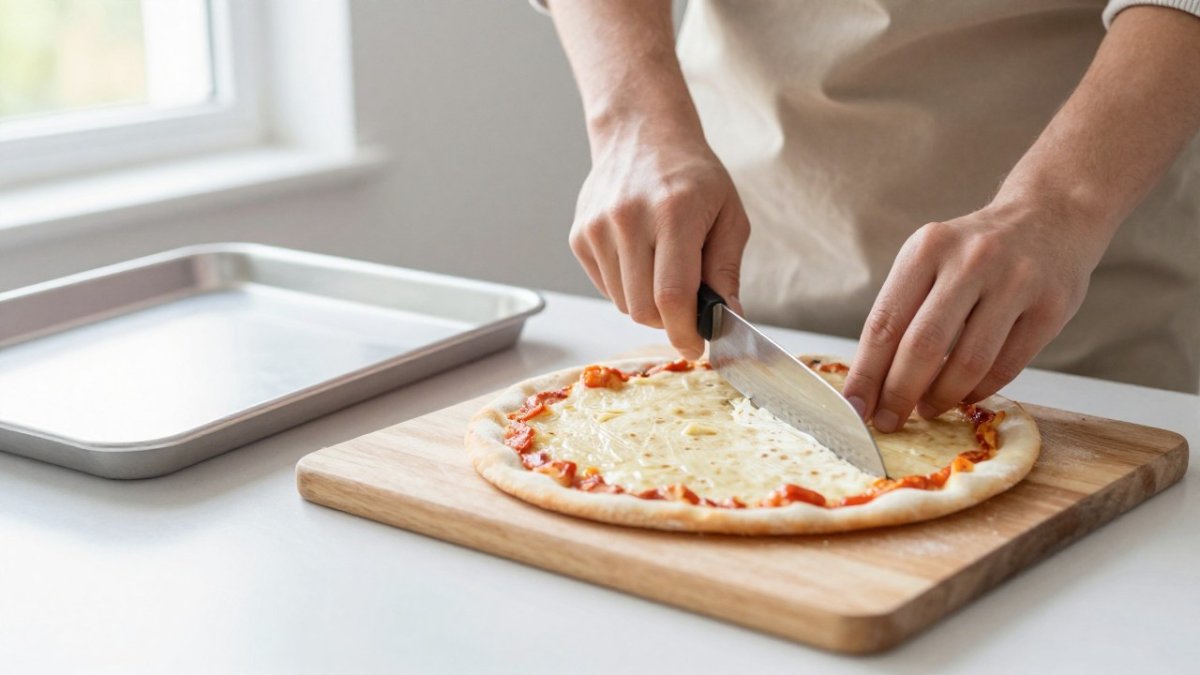
Understand where the transfer actually happens. At a party, gluten moves through four main routes:
- Cutting tools. A shared pizza cutter or knife is the most common culprit. A single cutter used on a regular pie and then on a gluten-free pie can transfer enough gluten to cause a reaction.
- Surfaces. Cutting boards, countertops, and pizza stones hold onto flour and crumbs. A gluten-free crust placed on a board that just held a regular pie picks up residue.
- Hands and gloves. Whoever slices or serves the pizza can carry gluten from one pie to the next.
- Airborne flour. If you are baking at home, flour dust settles on nearby surfaces and on any unwrapped food, including a gluten-free crust waiting to go in the oven.
Set up a separate gluten-free station. The simplest reliable approach is to give the gluten-free pizza its own tools and its own space:
- Use a dedicated cutting board and a dedicated cutter or knife for gluten-free slices, and keep them on a separate counter or tray.
- Keep the gluten-free pizza in its own box or on its own labeled tray, and do not let regular slices share that tray.
- Wash hands and change gloves before handling the gluten-free pie, and again before going back to regular pizza.
- If you are baking, put the gluten-free crust on its own sheet pan or parchment and keep it away from flour dust while regular dough is being worked.
Ask the pizzeria the right questions. Not every pizzeria can guarantee a safe gluten-free pie, and the answers matter more than the menu label. Ask whether the gluten-free crust is prepared in a separate area, whether a separate cutter and prep surface are used, and whether the crust comes from a dedicated gluten-free supplier.
Watch out: a gluten-free label on the menu does not guarantee a safe pie, some kitchens use the same oven, the same peel, and the same cutter for every pizza, so confirm the prep method before you order for a guest with celiac disease.
Label and serve with intention. At the party itself, label the gluten-free tray clearly and place it slightly apart from the regular pizzas so guests do not accidentally mix slices. Serve gluten-free slices first, before regular pizza crumbs spread across the table, and keep a separate serving utensil on the gluten-free tray.
Know the limits of what you can promise. A home kitchen or a busy pizzeria cannot always eliminate every trace of gluten, so be honest with your guest about what you can and cannot guarantee. Our team at Famous Pizza can explain how we handle gluten-free orders. Read more about us for background on our practices.
Cost, Serving Quality, and Logistics: Is It Worth the Extra Money?
Gluten-free pizza can be worth the extra money at a party when at least one guest must avoid gluten, and it is often not necessary when no one has a restriction. The useful question is not whether gluten-free crust costs more, it almost always does, but whether the premium buys enough safety and inclusion to justify the spend for your specific guest list.
Start with a per-guest cost estimate, not a per-pizza one. Gluten-free pies can run higher per pizza than regular pies, and they may yield fewer usable slices because the crust is more fragile. Ask your pizzeria for the current gluten-free size and price, then divide by the number of slices you can actually serve. That per-slice number is what you compare against the regular pie.
Estimate how many guests actually need gluten-free food. Most hosts overbuy gluten-free pizza because they count every guest as a potential eater. A practical rule: count only guests who have told you they have celiac disease or a gluten sensitivity, then add one or two slices of buffer.
Compare two ordering strategies.
- One dedicated gluten-free pizza plus regular pies for everyone else. This is the lower-cost path and the safer one for cross-contact, because the gluten-free pie stays in its own box and on its own tray. It works best when one to three guests need gluten-free food.
- Make every pizza gluten-free. This eliminates the separate-pie problem and lets the whole table eat from the same spread, but it multiplies the premium across the entire order and can disappoint guests who prefer a classic chewy crust. It makes sense mainly when a large share of the guest list needs gluten-free food or when the host wants a single, simple menu.
Plan for serving quality, because gluten-free crust is less forgiving. A few practical adjustments:
- Time the gluten-free pizza to arrive closer to when guests start eating, rather than at the very start of the party.
- Keep it in its box or on a covered tray until serving, and avoid stacking heavy pans on top.
- Reheat leftover slices in a 350°F oven for about 5 to 7 minutes rather than in a microwave, which steams the crust and makes it limp.
- If you are baking at home, follow the package or recipe temperature closely; gluten-free crusts often need a preheated oven and a hot surface to set properly.
Watch out: ordering gluten-free pizza as an afterthought at the last minute often means the pizzeria is out of gluten-free crust or cannot guarantee a separate prep area, so confirm availability and prep method when you place the order, not when the delivery arrives.
A simple worth-it verdict. If one guest has celiac disease, the premium is almost always worth it, the alternative is a guest who cannot eat, and the cost of one or two gluten-free pies is small against the rest of a party budget. If several guests need gluten-free food, compare the cost of a few dedicated pies against making the whole order gluten-free; the dedicated-pie approach is usually cheaper and safer. If no one needs gluten-free food, skip the premium and spend it on better toppings or more regular pizza.
Planning a Party Menu Everyone Can Eat From
A good party menu serves gluten-free guests without making them feel singled out. Pair gluten-free pizza with naturally gluten-free sides like salads, fruit, and roasted vegetables. Label every dish so guests can choose with confidence.
Casual gatherings work well with a mix of styles. Browse our best pizza for casual gatherings guide for ideas on balancing crowd favorites with specialty options. For larger events, our complete guide to ordering pizza for large groups covers quantities and timing.
Here is a simple menu plan:
- One gluten-free pizza with a bold sauce and fresh toppings
- One or two regular pizzas for the majority
- A green salad and fresh fruit
- Clearly labeled allergen cards
Famous Pizza is a family-owned business with over 20 years of experience, and we want every guest at your table to feel welcome. If you are weighing gluten-free pizza for your next gathering, contact us to ask about options and current pricing.
Frequently Asked Questions
Is gluten-free pizza crust any good?
Quality varies a lot by maker and by how the crust is baked. Many gluten-free crusts, especially those made with rice, almond, or cauliflower bases, are thinner, firmer, and less chewy than wheat dough. Good versions crisp well at the edges and hold toppings. Poorly made ones can turn soggy or dry. The fastest way to judge is a small test order before a party, so you know what you are serving to guests.
How much gluten-free pizza should I order for a party?
Plan on the same overall amount of pizza you would order for a regular crowd, then adjust for appetite and how many guests need gluten-free. Many hosts order a smaller share of gluten-free pies, since fewer people eat them, but keep enough so those guests are not left with leftovers of one topping. Check Famous Pizza's website or ask for a quote when you order.
Can gluten-free pizza be prepared safely for someone with celiac disease?
Cross-contact is the main risk. Flour from wheat-based pizzas can settle on shared surfaces, utensils, and ovens, so a gluten-free pizza can still expose a guest with celiac disease. Ask the kitchen how gluten-free orders are prepared and packaged, keep gluten-free slices separate from regular ones, and use clean cutters and servers. Guests with celiac disease should make their own judgment about what is safe for them.